When a person is injured, the natural response is to help immediately. This instinct is valuable, but acting on outdated habits or unverified home remedies can worsen the injury. Most first aid errors are easily avoided when the correct procedures are known. This article outlines nine common mistakes and the recommended actions to take instead.
1. Moving Someone After a Serious Injury
A spinal injury can follow a high-impact collision, a significant fall, a head-first dive, or a hard sports injury. Unnecessary movement may worsen a spinal injury or cause further nerve damage.
- Keep the person as still as possible and leave them in the position you found them.
- Move them only if there is immediate danger, if you need to give CPR, or if you must control life-threatening bleeding.
2. Putting Household Remedies on Burns
Do not apply butter, toothpaste, oil, ice, creams or other household substances to a burn. They can trap heat or damage the skin further.
- Cool a thermal burn under cool running water for 20 minutes. Cooling can still help if you start within about three hours of the injury.
- Remove jewellery and loose clothing near the burn as soon as possible, but do not pull away anything stuck to the skin.
- Cover the area loosely with a clean, non-fluffy dressing.
Chemical and electrical burns need different care. A chemical burn needs long rinsing with water and emergency medical assessment. With an electrical burn, make sure the power is switched off safely and get medical help.
3. Failing to Control Severe Bleeding Properly
Severe bleeding can become life-threatening within minutes, so apply continuous direct pressure as early as possible.
- Press firmly on the wound with a clean cloth or dressing.
- If blood soaks through, place another cloth on top instead of removing the first one.
- Do not pull out an embedded object. Press around it instead.
- Do not keep lifting the dressing to check, as this can break the clot.
For life-threatening limb bleeding, trained first aiders may use a tourniquet when direct pressure is not enough or cannot be maintained.
4. Using the Wrong Technique for Choking
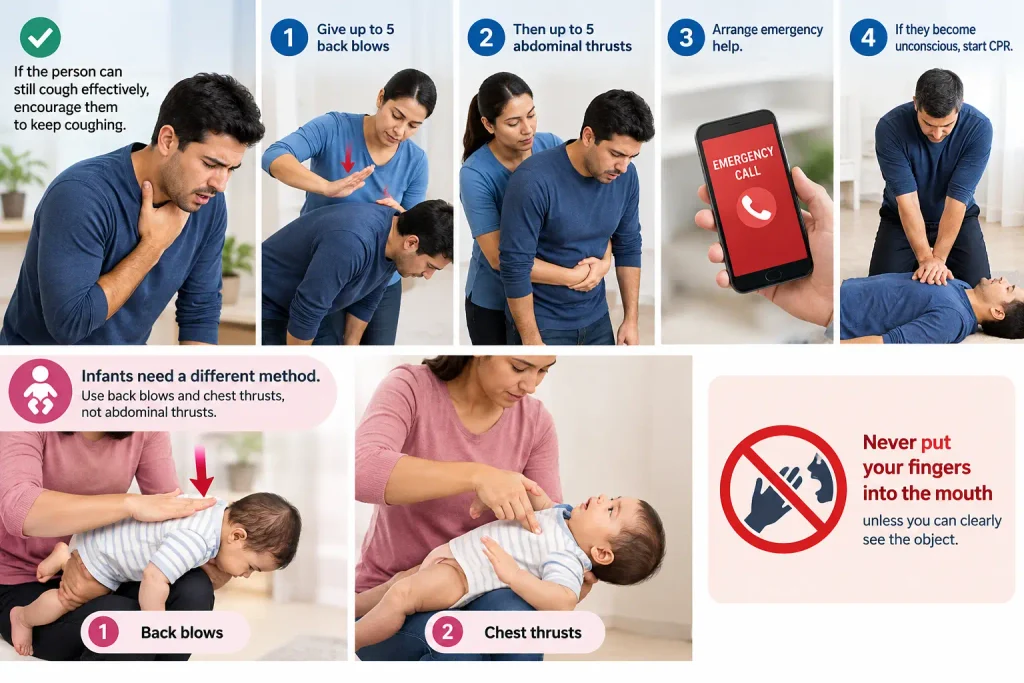
If an adult is choking but can still cough effectively, encourage them to keep coughing. If the cough becomes ineffective and they cannot speak or breathe normally, give up to five back blows, then up to five abdominal thrusts, while arranging emergency help. If they become unconscious, start CPR. Never put your fingers into the mouth unless you can clearly see the object.
Infants need a different method. Use back blows and chest thrusts, not abdominal thrusts.
5. Putting Something in the Mouth During a Seizure
Never put an object in the person’s mouth and never hold them down. Instead:
- Clear hard or sharp objects from around them.
- Cushion the head and time the seizure.
- When the shaking stops, if they are not awake and aware, place them on their side if it is safe to do so.
Call for emergency help if the seizure lasts longer than five minutes, repeats without the person regaining consciousness, causes serious injury, happens in water, or if they have trouble breathing or do not return to their usual state.
6. Treating a Nosebleed by Tilting the Head Back
Tilting the head back sends blood down the throat. Sit upright, lean slightly forward, and pinch the soft part of the nose continuously for 10 to 15 minutes.
7. Missing Warning Signs After a Head Injury
Some symptoms may appear or worsen later, so watch the person closely. Seek urgent medical help if you see:
- Increasing drowsiness or difficulty waking
- Confusion or unusual behaviour
- Repeated vomiting
- Severe or worsening headache
- Weakness or difficulty speaking
- Seizures or loss of consciousness
- Blood or clear fluid from the nose or ears
8. Treating Heat Stroke Like Ordinary Tiredness
Heat stroke is a medical emergency, and it is a real risk in the UAE for outdoor workers, drivers and athletes. Call for help and begin rapid cooling while you wait.
- Move the person to a cool, shaded area.
- Remove excess clothing.
- Cool the body quickly with water, wet cloths and airflow.
- Do not force the person to drink if they are confused, drowsy, unconscious or unable to swallow safely.
9. Delaying Emergency Medical Help
Waiting to see if things improve, or driving a seriously ill person to hospital yourself, can cost valuable time. In the UAE, call 998 for an ambulance when someone is unconscious, has severe breathing difficulty, has life-threatening bleeding, has severe chest pain, or shows signs of a stroke or another serious emergency. Follow the operator’s instructions until help arrives.
Why First Aid Training Matters
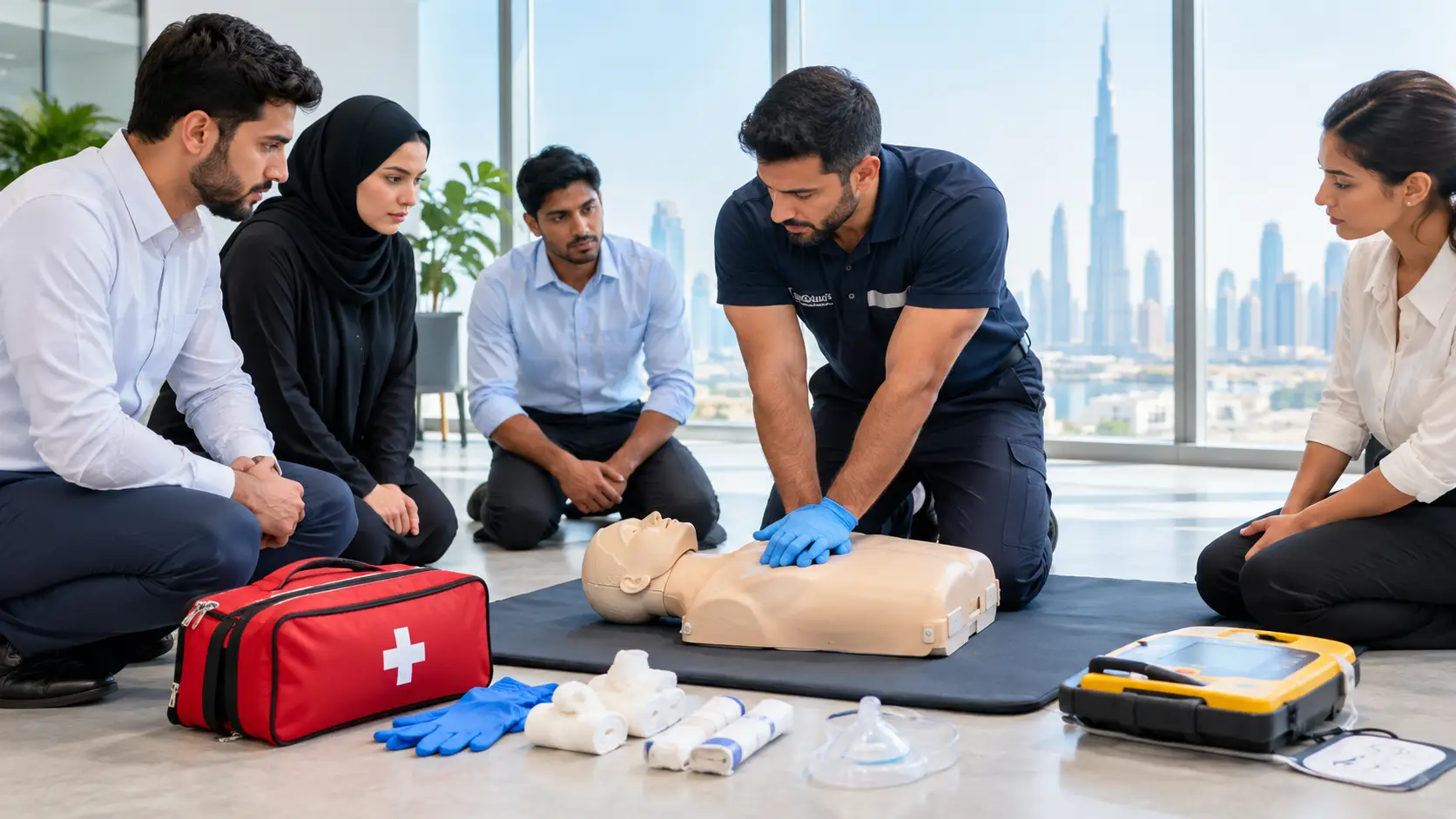
Reading about first aid helps, but real emergencies are stressful. Hands-on practice with CPR, choking relief and bleeding control helps you stay calm and act correctly.
HSS provides practical first aid training built around home, workplace and real-world emergency situations. Its programmes are offered through accrediting bodies such as HSI, ASHI and HABC.
First Aid Courses from HSS
- First Aid for Parents: for parents and nannies handling emergencies with children at home.
- First Aid for Office Workplace: for teams that want to be ready at work.
- First Aid for Construction: for site teams facing higher risks.
Conclusion:
Good first aid is about doing the right thing at the right time. Keep the injured person still, skip household remedies, press on bleeding, protect the airway, and call 998 early. These small choices can decide whether an injury stays minor or becomes serious.
First aid guidance does not replace professional medical assessment. In a serious or life-threatening emergency, call 998 in the UAE and follow the emergency operator’s instructions.