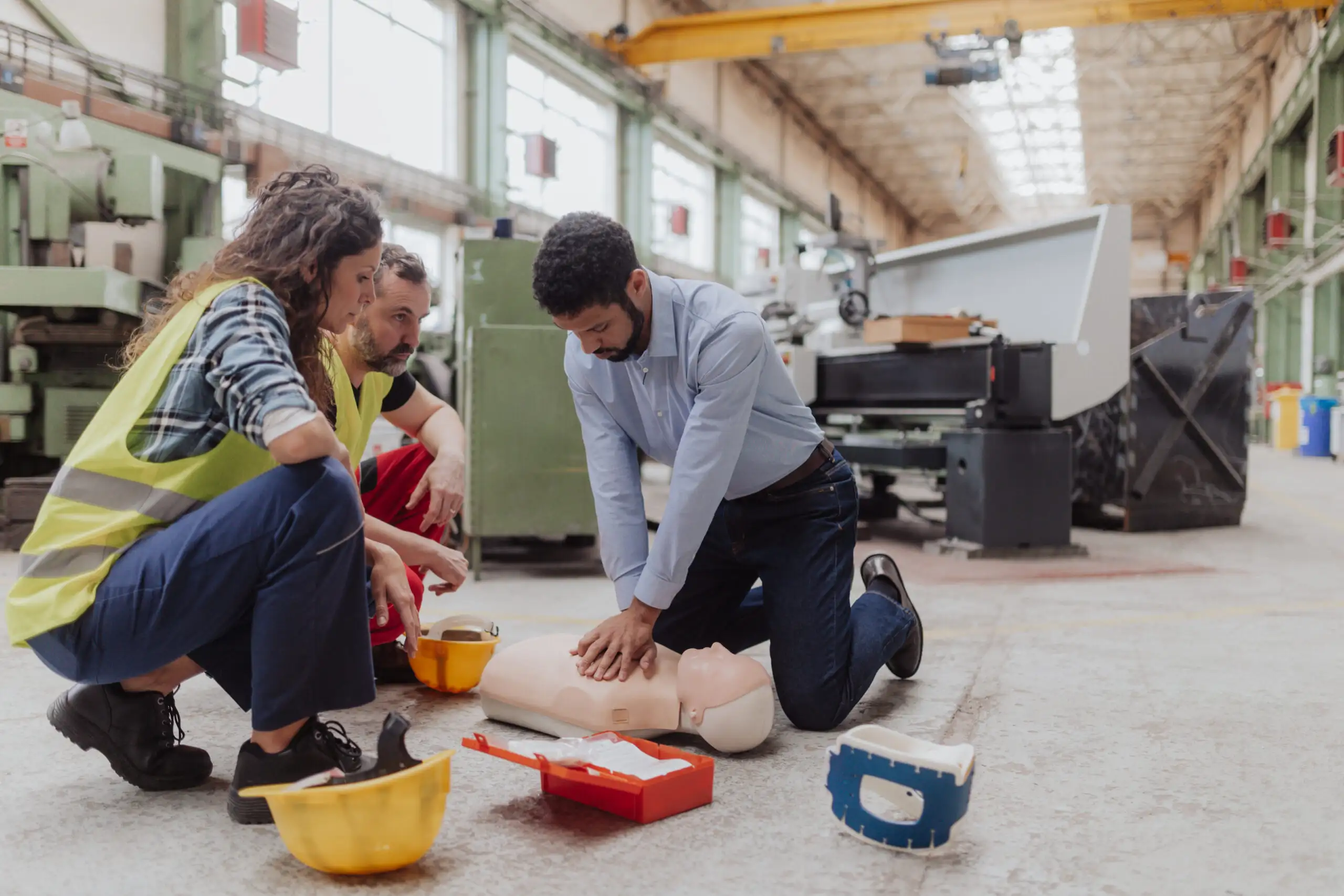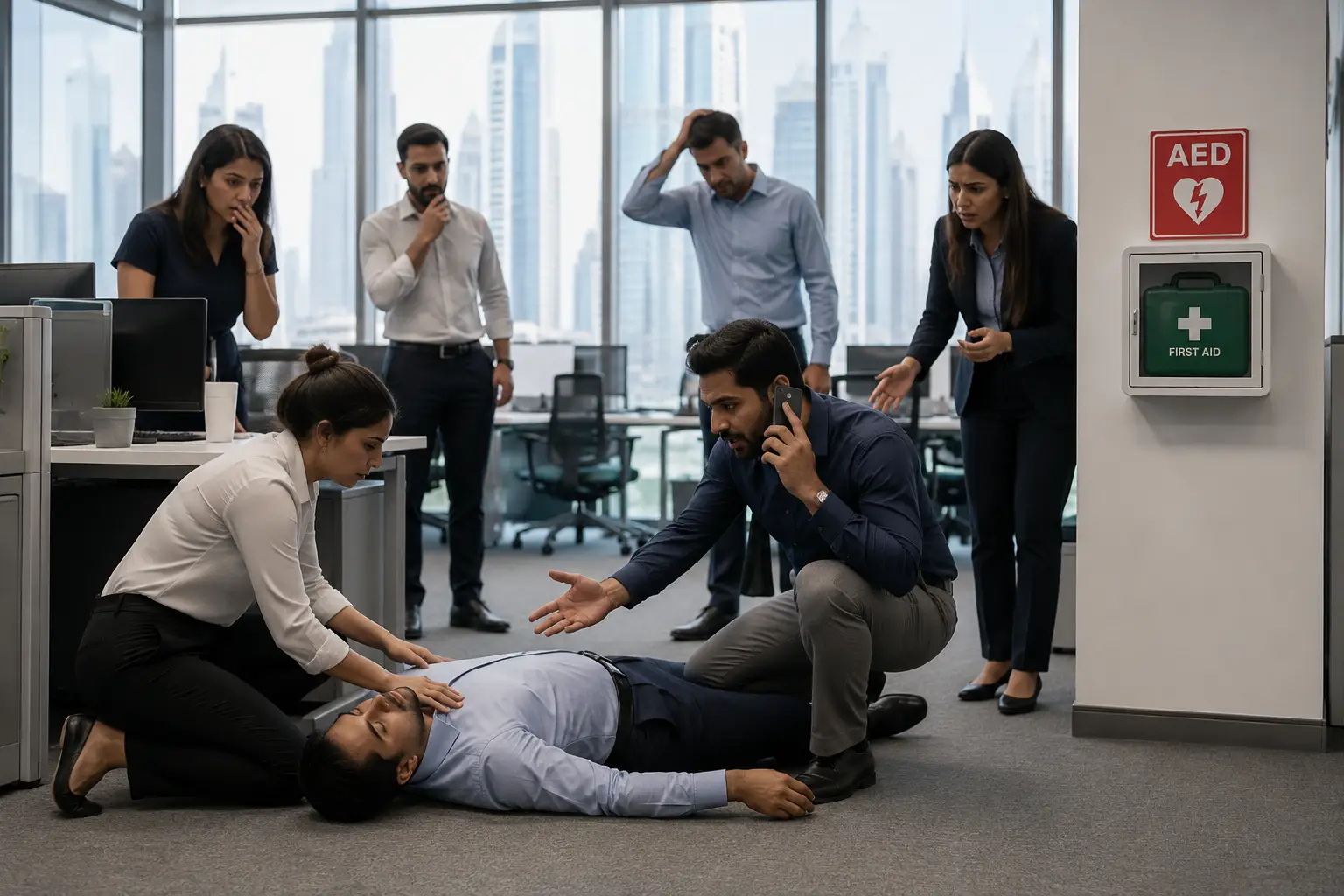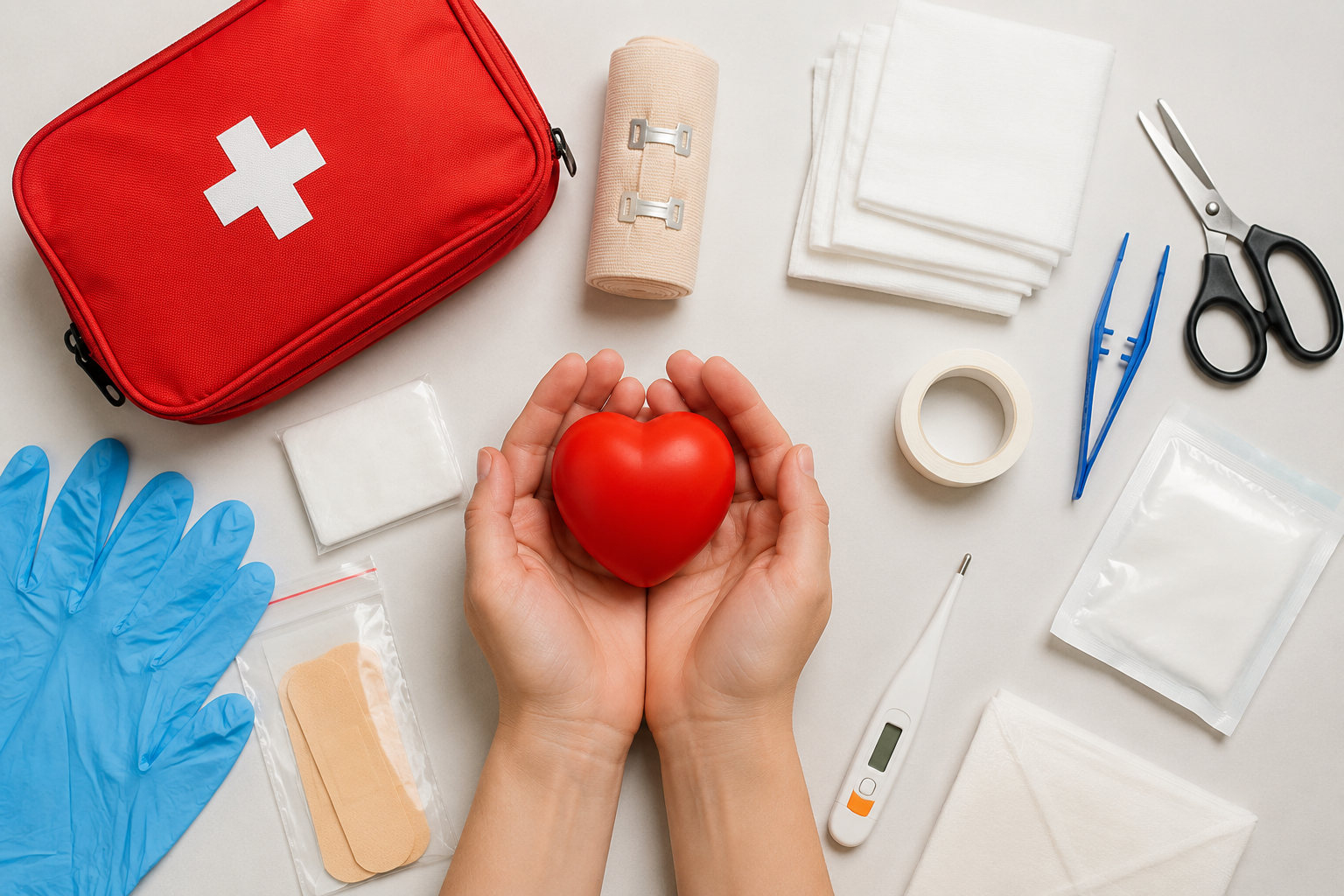
No one plans for an emergency. One moment everything is normal, and the next, someone is choking, collapsing, or struggling to stay afloat. In these situations, a medical degree is not required, the right knowledge and practice are. When that knowledge becomes instinct, you become someone capable of making a real difference.
At HSS, we’ve spent the last 14 years training people across the UAE, the wider GCC, and the Philippines to handle exactly these kinds of moments. Parents, teachers, office staff, coaches we’ve seen first and how a bit of proper training turns panic into action. Here are ten first aid skills worth learning, and why practice matters just as much as knowing the theory.
1. Cardiopulmonary Resuscitation (CPR)
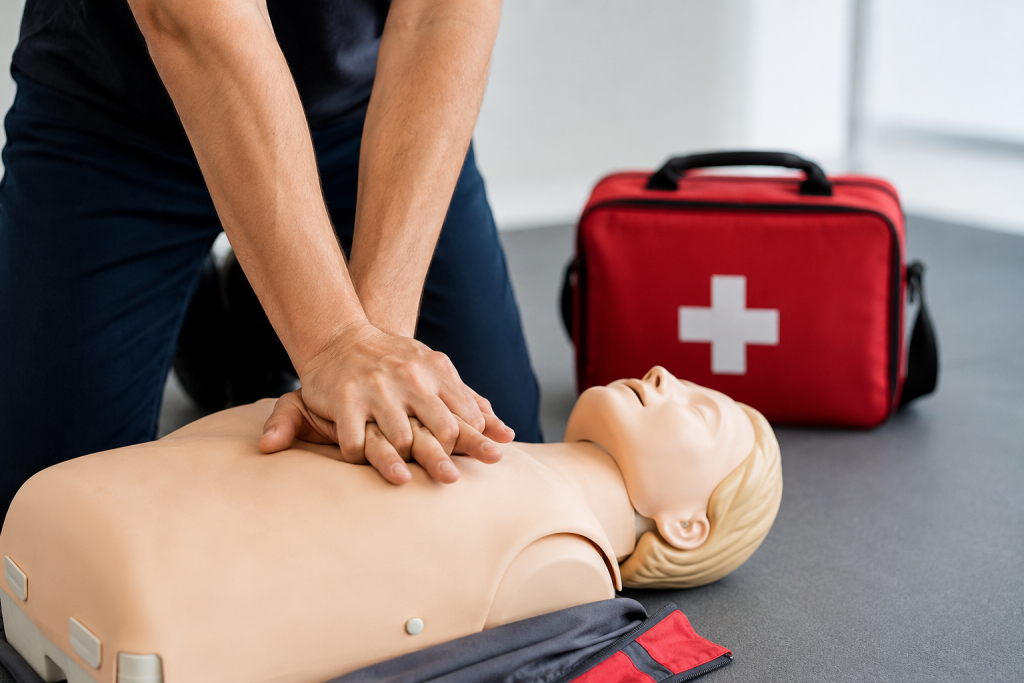
CPR keeps oxygen-rich blood flowing to the brain and vital organs when someone’s heart has stopped. The core technique of hard, fast chest compressions at a rate of 100–120 per minute can double or triple a person’s chance of survival after cardiac arrest. Adult, child, and infant CPR each require slightly different hand placement and compression depth, which is why hands-on practice matters far more than reading a diagram.
2. Using an Automated External Defibrillator (AED)
An AED analyzes a person’s heart rhythm and delivers a shock if needed to restore a normal rhythm. Modern devices are designed for bystanders, with voice prompts guiding every step, but hesitation costs precious minutes. Knowing where the pads go, when to stand clear, and how to combine AED use with CPR turns a public-access device into a genuine lifesaver.
3. Clearing a Choking Airway
Choking can turn fatal in minutes. The Heimlich manoeuvre (abdominal thrusts) for adults and older children, and back blows combined with chest thrusts for infants, are simple physical techniques but only if you’ve practiced the correct hand position and force beforehand. Recognizing the universal choking sign is just as important as the response itself.
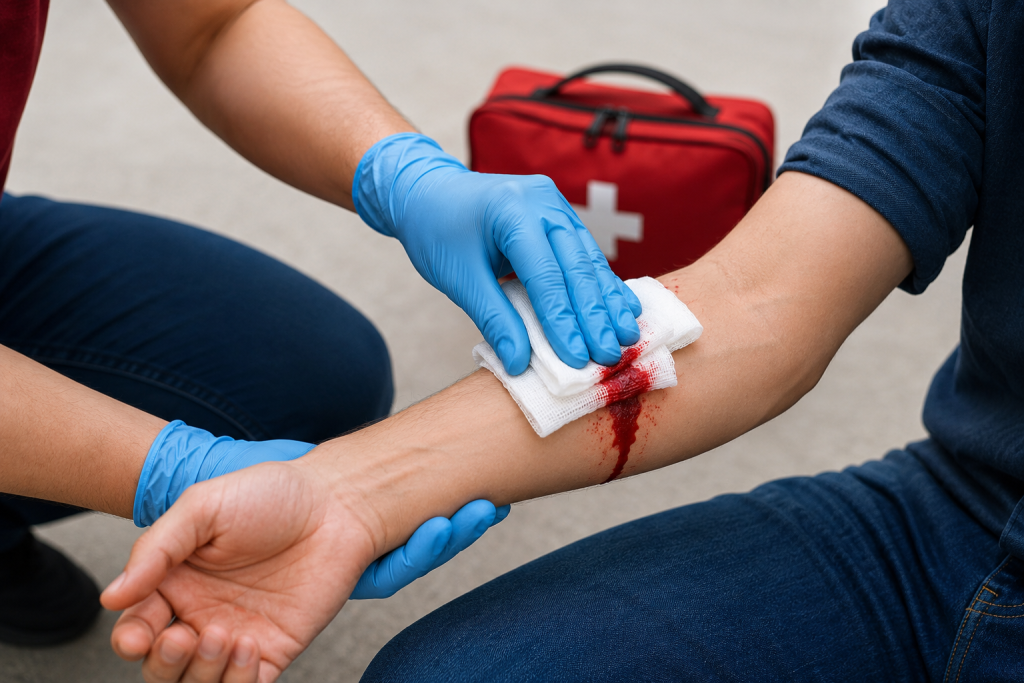
4. Controlling Severe Bleeding
Uncontrolled bleeding can lead to shock and death faster than most people realize. Direct, firm pressure on the wound, elevating the injured area, and knowing when and how to apply a tourniquet correctly are essential skills for workplace, home, and roadside emergencies alike.
5. Recognizing and Responding to Stroke
FAST methods to find the stroke are face drooping, Arm weakness, Speech difficulty, Time to call emergency services. The odds of recovery are dramatically better if action is taken within the first hour . Rapid recognition is one of the most valuable skills a non-medical bystander can have .
6. Managing Burns
Not all burns are treated the same way. Knowing how to cool a burn safely, when to remove jewelry or clothing, and critically when a burn requires emergency medical care rather than home treatment prevents complications like infection and long-term scarring.
7. Handling Seizures Safely
The instinct to restrain someone during a seizure is often wrong. The correct response is to protect the person from injury, cushion their head, time the seizure, and know the signs that indicate you need to call for emergency help immediately.
8. Treating Shock
Shock the body’s dangerous response to trauma, blood loss, or severe illness can develop quietly. Recognizing early signs such as pale, clammy skin, rapid breathing, and confusion, and knowing how to position and reassure the person while waiting for help, can prevent the condition from worsening.
9. The Recovery Position
Placing an unconscious but breathing person into the recovery position keeps their airway open and prevents choking on vomit or fluids. It’s one of the simplest techniques to learn, yet it’s frequently done incorrectly under stress which is exactly why it needs to be practiced, not just understood.
10. Basic Emergency Assessment and Communication
Before any technique matters, you need to assess the scene safely, check responsiveness and breathing, and communicate clearly with emergency services giving your location, the nature of the emergency, and following dispatcher instructions. This skill ties every other technique together and often determines how quickly professional help arrives.
Knowledge Alone Isn’t Enough Practice Is
Reading about these techniques builds awareness, but muscle memory is what carries you through a real emergency. Certified, hands-on training under experienced instructors is the only reliable way to make sure these skills are there when you need them not just in theory, but in your hands.
Get Certified with HSS Health and Safety Solutions
With over 14 years of experience across the UAE, GCC, and the Philippines, HSS Health and Safety Solutions delivers internationally accredited training through bodies including the Health and Safety Institute (HSI), the American Safety and Health Institute (ASHI), the Highfield Awarding Body for Compliance (HABC), and Back2Basics. Our medically qualified instructors design practical, scenario-based courses for parents, caregivers, office workers, schools, sports coaches, personal trainers, and construction teams alike.
Popular courses include:
- First Aid for Parents — It is essential home-emergency skills for families and nannies
- First Aid for Office Workplace — CPR, AED, and emergency response for corporate teams
- First Aid for Schools and Nurseries — pediatric-focused training for educators and childcare staff
- First Aid for Construction — site-specific emergency response training
- First Aid for Sports Coaches and Personal Trainers — injury and emergency management for active environments
- Pediatric First Aid — held every Friday and Sunday, designed specifically for nannies and parents
Conclusion:
Every second counts in an emergency, and the difference between panic and action is training. These ten skills can turn any bystander into a lifesaver but only with proper practice. HSS Health and Safety Solutions has spent over 14 years preparing people across the UAE, GCC, and the Philippines to respond with confidence, not fear. Don’t wait for an emergency to wish you’d learned to enroll with HSS today.