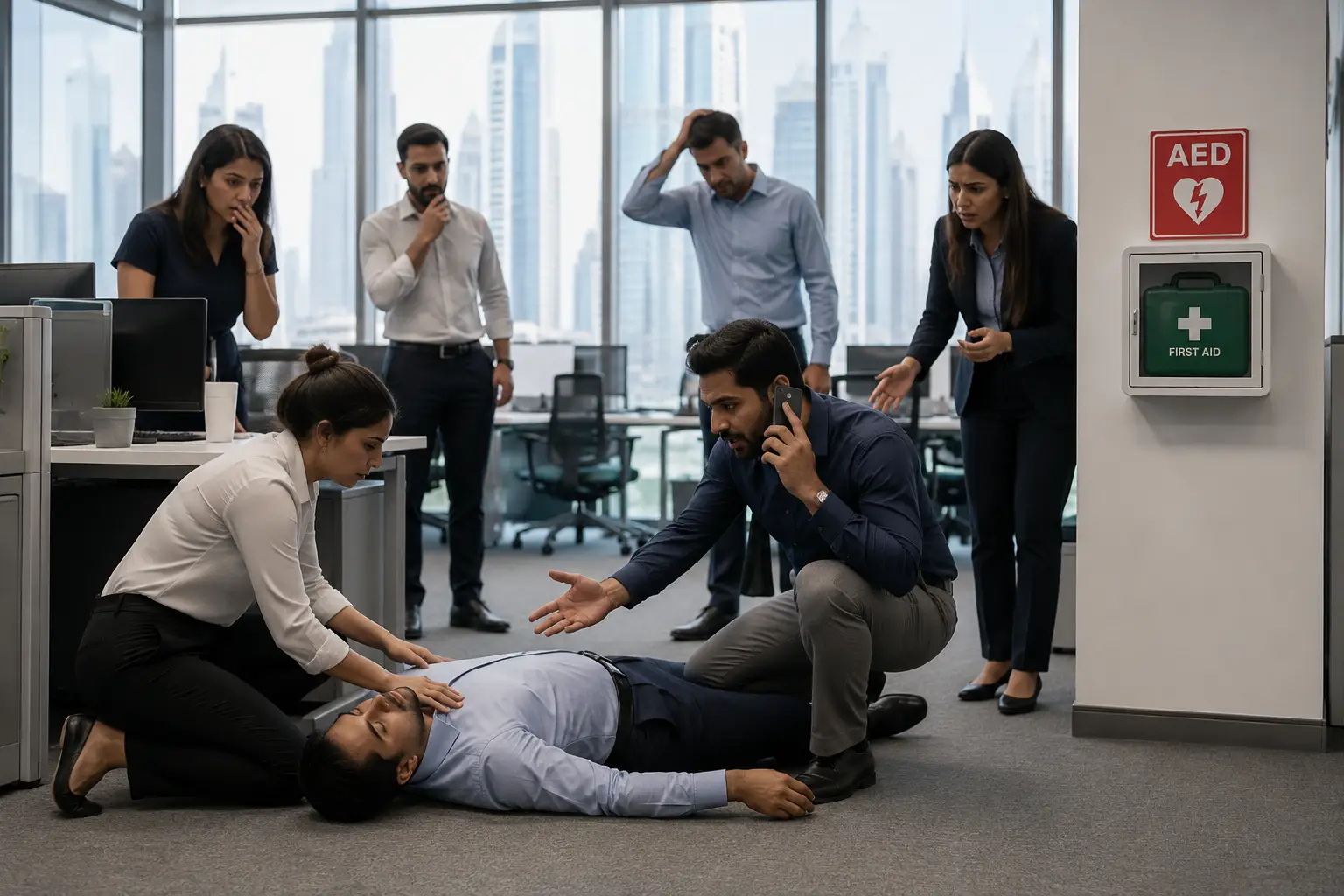
It was a Tuesday morning like any other in a Dubai office – meetings running, calls being taken, people focused on their work. Then a colleague collapsed.
For a moment, no one quite knew what to do. One person reached for their phone. Another began searching online for guidance. A few stood by, uncertain whether to move the person or wait for help to arrive.
In situations like this, the first few minutes often determine the outcome. Yet most workplaces, when tested, are not truly prepared to respond. Most office days end without any major incidents, which is why many people assume medical emergencies are unlikely to happen. Unfortunately, emergencies do not come with a warning.
At HSS, we have seen that many workplaces are still not fully prepared to handle these situations. The challenge is not a lack of concern. More often, people simply do not know what to do when an emergency happens right in front of them.
The Office Is Not Always as Safe as People Think
When people hear the word “workplace accident,” they often imagine construction sites, factories, or warehouses. Offices are usually considered low-risk environments.
But medical emergencies are different. They can happen anywhere.
An employee may experience chest pain, dizziness, breathing difficulties, or a sudden allergic reaction. Someone might slip on a wet floor, fall on a staircase, or choke while eating lunch. These situations may not happen every day, but they happen often enough that businesses should be prepared.
The problem is that many office workers have never faced a real emergency before. When something unexpected happens, uncertainty takes over.
People Want to Help but Don’t Know How
In most workplaces, employees genuinely want to help their colleagues. The difficulty begins when they are suddenly faced with a medical situation.
Imagine someone collapsing during a meeting. The room immediately becomes tense. A few people rush over, others stand back, and everyone starts asking questions at the same time.
Should someone move the person? Should an ambulance be called immediately? Is it safe to give water? Who is trained to help?
Without basic knowledge, even simple decisions can feel difficult. Instead of taking action, people often spend valuable time trying to figure out what to do next.
First Aid Knowledge Is Often Missing
Many professionals spend years developing career skills, learning new software, attending workshops, and gaining industry certifications. Yet basic first aid training is something many have never received.
This becomes obvious during emergencies.
A person may know how to manage a project worth millions of dirhams but still feel completely unsure about helping a colleague who has fainted.
Knowing basic first aid does not mean becoming a healthcare professional. It simply means understanding how to respond safely until medical support arrives.
That small amount of knowledge can make a significant difference.
Emergency Equipment Is Sometimes Forgotten
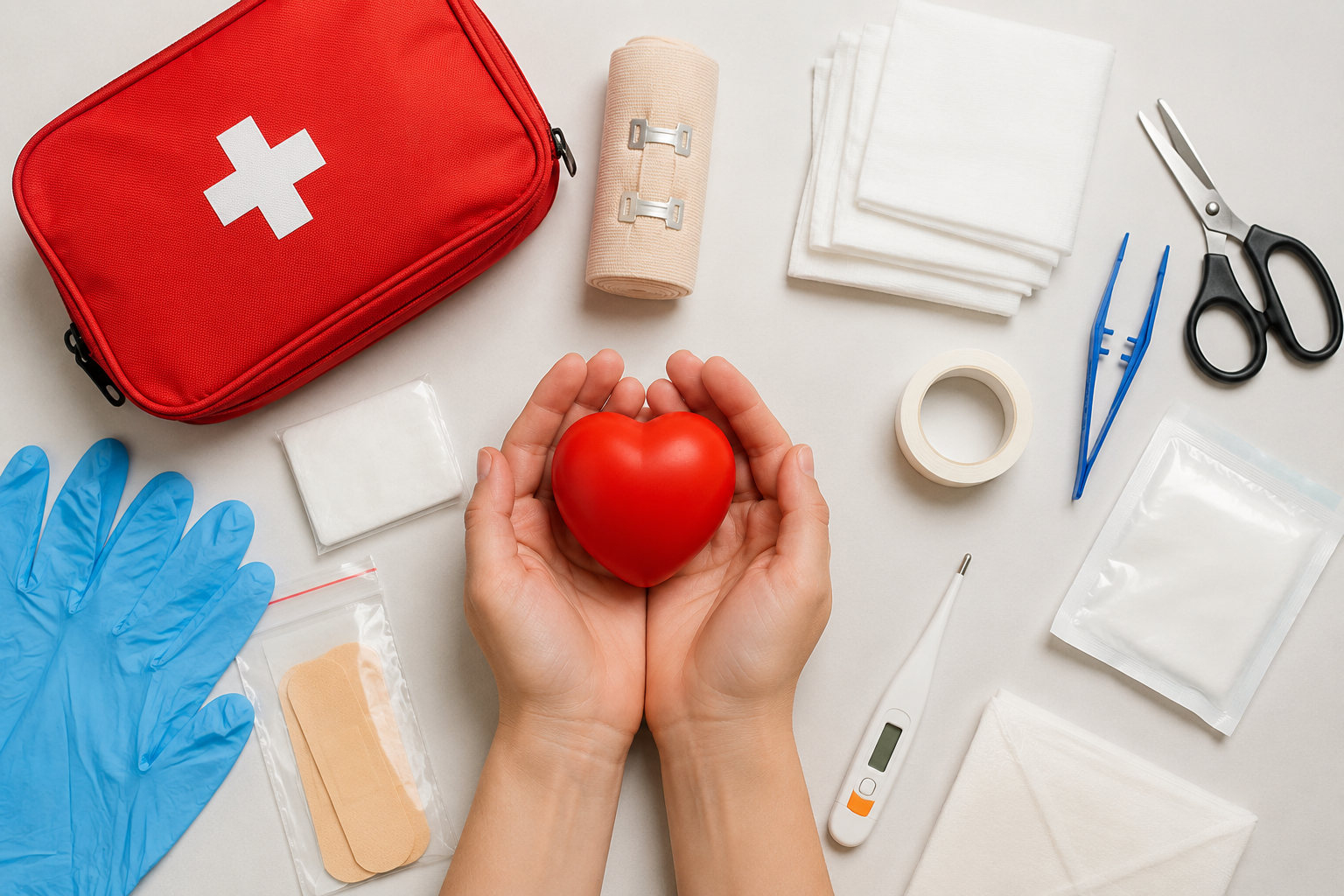
Many offices have first aid kits available because they are required or recommended as part of workplace safety practices.
The issue is that employees often do not know where these kits are kept.
During a calm day, this may not seem important. During an emergency, however, every minute feels longer. People start searching drawers, cabinets, and storage rooms while trying to help someone at the same time.
The same situation can happen with AEDs (Automated External Defibrillators). Some workplaces have them installed, but very few employees feel confident using them.
Equipment is valuable only when people know where it is and how it works.
Emergency Plans Are Not Always Clear
Many companies have detailed procedures for fire alarms and building evacuations. Employees know where the exits are and where to gather outside.
Medical emergencies are often different.
In some offices, there is no clear plan explaining who should take charge, who should contact emergency services, or how staff should respond.
As a result, multiple people may attempt the same task while other important actions are forgotten.
A clear and simple emergency response plan removes confusion and helps everyone work together more effectively.
Practice Makes a Difference
Reading a safety document is helpful, but it is not the same as facing a real situation.
Many employees have completed workplace inductions or watched safety presentations, yet they have never practiced responding to an emergency.
This is one reason people freeze when something unexpected happens.
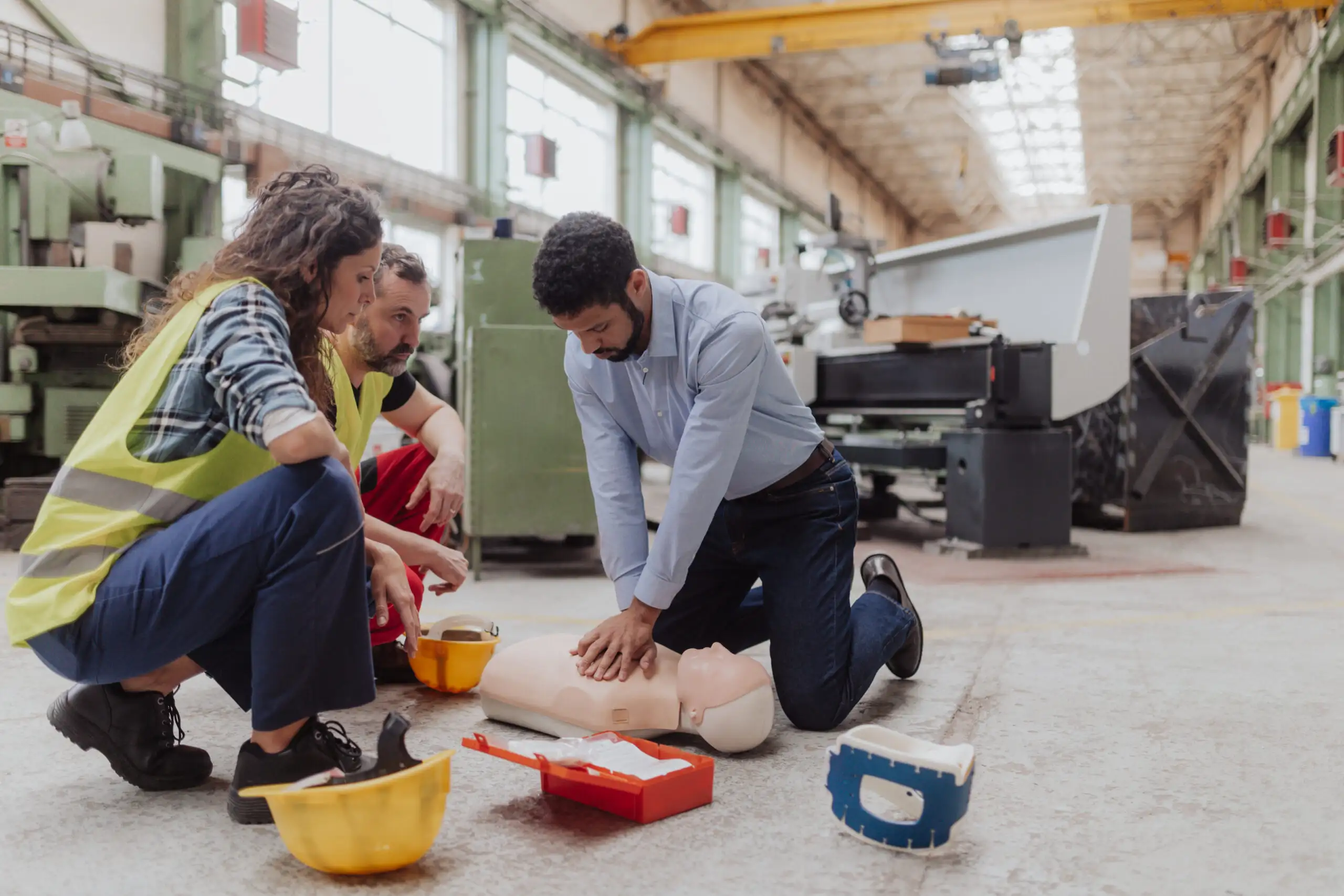
Practical training gives employees a chance to experience realistic situations in a controlled setting. It helps them become familiar with the steps they need to take and makes the response feel less overwhelming.
The more familiar people are with emergency procedures, the more confident they become.
Building a Workplace Where Safety Matters
Emergency preparedness is not just about training courses or a first aid kit sitting there in a drawer. It’s really about workplace culture.
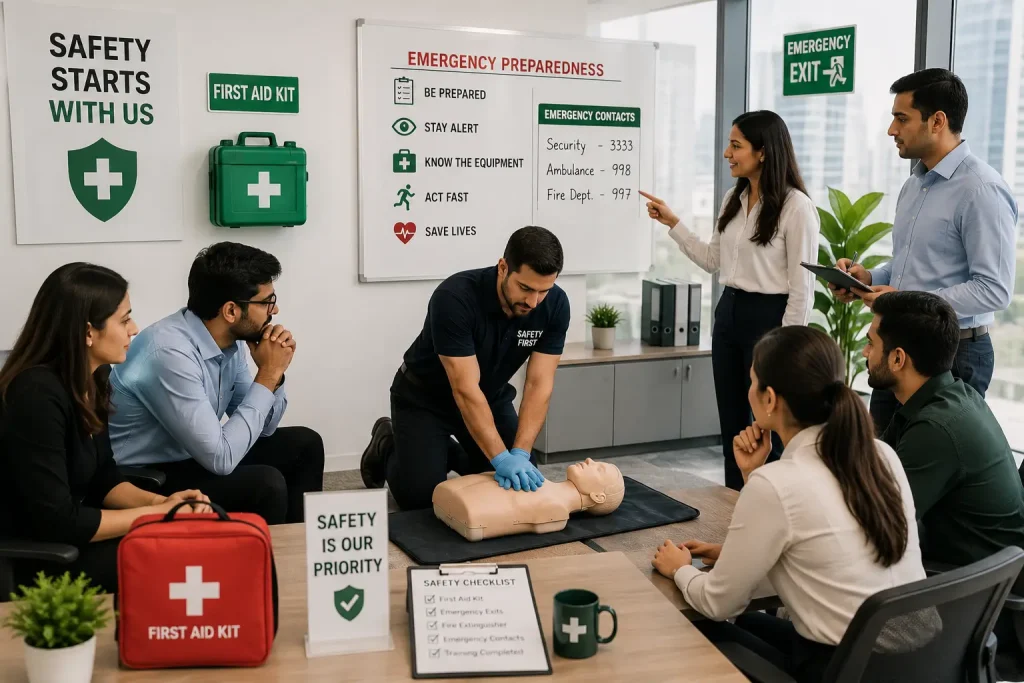
In offices where safety is discussed regularly, employees become more alert to possible hazards. They remember where the equipment is located, and they get that acting quickly when someone needs help.
Small actions can create a big effect, and you see it over time:
- Keeping first aid kits easy to spot
- Updating the emergency contact details
- Doing refresher training sessions regularly
- Encouraging people to learn basic first aid
Little by little, these habits turn a normal workplace into a safer environment.
Why Preparedness Benefits Everyone
When employees know what to do in an emergency, the advantages aren’t limited to the department either. It spreads through the whole organisation.
People feel more settled because they know support is actually available if something happens. Even new employees tend to settle in faster when the safety steps are clear and easy to follow.
Most importantly, a prepared workplace can provide faster support when every second counts.
How HSS Supports Workplace Safety
At HSS, we work with businesses across Dubai to help improve emergency preparedness. Our training programs are designed for real workplace situations rather than textbook examples.
We focus on practical skills that employees can understand and remember, including:
- Basic first aid
- CPR awareness
- AED familiarization
- Workplace emergency response
We aim to help organisations build confidence and improve readiness without making the learning process complicated.
Conclusion
A lot of Dubai offices are actually pretty well organised when it comes to day-to-day business operations, but medical emergencies? Those can still show little gaps in readiness, even when everything looks fine on paper.
The problem usually isn’t that people don’t care. Most of the time, employees genuinely want to help; they’ve never been taught what to do, or at least not in a clear, practical way.
That’s where small-but-straightforward training can change things. Pair it with easy-to-follow procedures and ongoing reminders, and suddenly people are more likely to stay composed, respond quicker, and look out for each other when something unexpected happens.
At HSS, we think emergency preparedness should be part of every workplace, no matter the size or the sector.