The UAE’s desert is thrilling to explore, whether through a dune bash, a quad bike ride, or a quiet sunset visit. But this same environment can turn dangerous quickly without proper preparation. Extreme heat, dehydration, and remote areas with poor signal are all real risks to consider. HSS provides first-aid courses to help individuals and organisations build practical skills for responding to emergencies.
Why the Desert Demands Extra Caution
The desert, unlike a city environment, allows very little margin for error. Temperatures in the daytime can easily top 45 degrees Celsius, and help may be hours away, while the terrain itself makes movement and rescue more difficult. A minor issue, like a sprained ankle or mild dehydration, can become a serious one if not treated early. This is exactly why knowing basic first aid is not an option on desert trips; it is a must.
Common Desert Emergencies and How to Respond
1. Heat Exhaustion and Heat Stroke
These are the two most frequent medical emergencies in desert settings, and it is important to know the difference.
- Heat exhaustion symptoms include heavy sweating, weakness, nausea, headache, and cold or clammy skin. Move the person to shade immediately, loosen tight clothing, and give them small sips of water or an electrolyte drink.
- Heat stroke is far more serious. Watch for confusion, a rapid pulse, hot and dry skin, and loss of consciousness. This is a medical emergency. Call for help right away, move the person out of direct sun, and cool their body using wet cloths, fanning, or any available water while waiting for medical assistance.

2. Dehydration
The dry desert air pulls moisture from the body faster than most people realise, often before thirst even kicks in. Encourage regular sips of water throughout the day rather than waiting until someone feels thirsty. Dark urine, dizziness, and fatigue Never ignore early warning signs like dark urine, dizziness, and fatigue.
3. Sunburn and Skin Damage
The desert sun doesn’t take long to burn exposed skin, sometimes within an hour or two if you’re not careful. If it happens, don’t panic. Just cool the area down with a damp cloth, dab on some aloe vera or a gentle lotion, and keep it out of the sun until it heals. If you observe severe blistering or the onset of a fever, it’s advisable to consult a doctor instead of waiting for it to resolve on its own.
4. Insect and Reptile Encounters
Scorpions, snakes, and various insects call the desert home, and a bite or sting from any of them can be painful and sometimes venomous. If it happens to someone in your group, here’s what to do:
- Try to keep them calm and still; moving around only speeds up how fast venom spreads through the body.
- Skip the old advice about cutting the wound or sucking out the venom; it doesn’t work and often makes things worse.
- Keep the affected arm or leg as still as possible and get medical help right away.
5. Cuts, Sprains, and Vehicle-Related Injuries
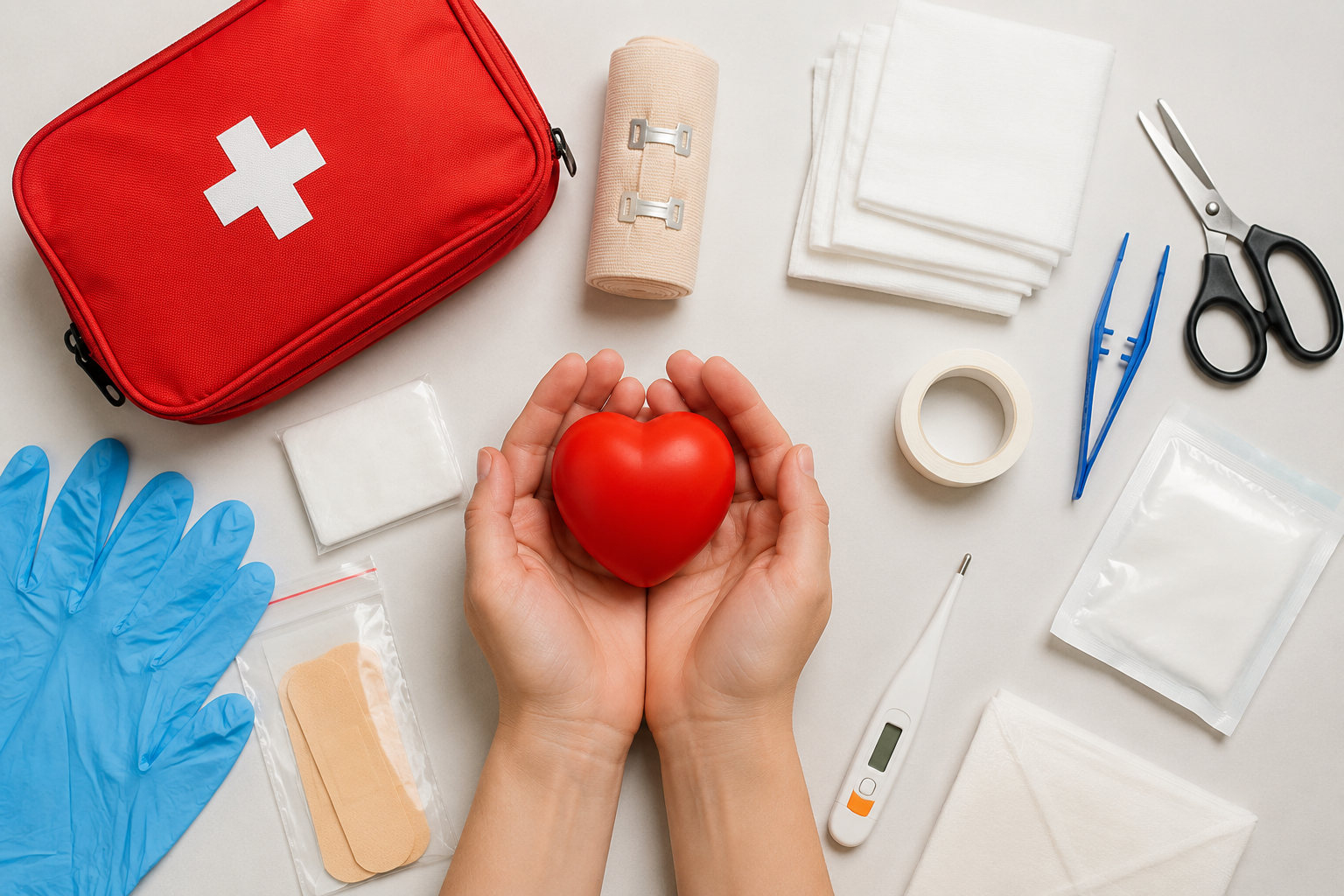
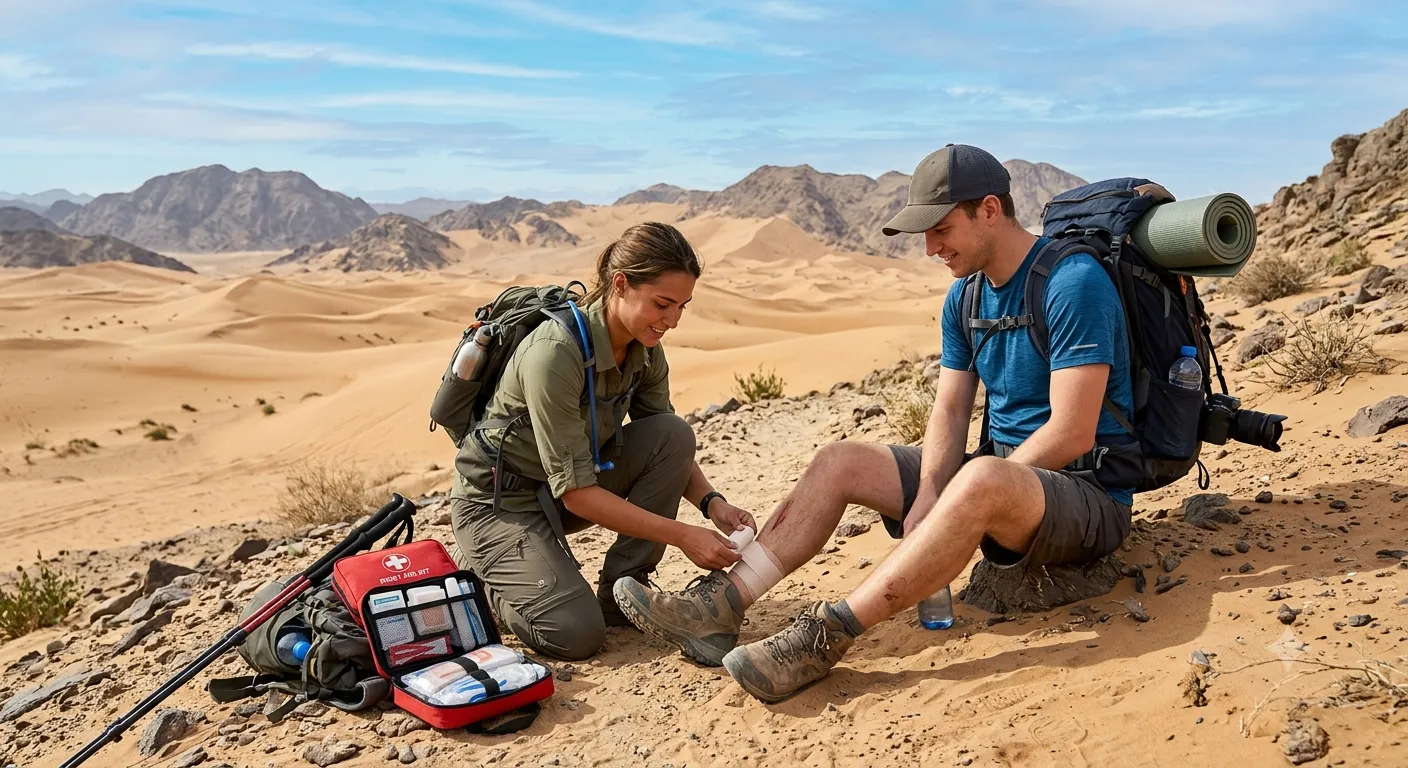
Off-roading and dune bashing are fun, but they come with their share of bumps and bruises, cuts, sprains, and in the worst case, a rollover that leads to something more serious. That’s why a basic first aid kit belongs in every desert trip, packed with antiseptic wipes, bandages, a splint, and gauze. If you suspect a fracture or spinal injury, try not to move the person at all unless staying put puts them in greater danger, and get professional medical help on the way as quickly as you can.
Before You Go: Preparation Makes the Difference
A good first aid response starts long before an emergency happens. If you are organising a group trip or a corporate desert event, it is worth carrying out a proper risk assessment beforehand to identify hazards specific to your route and activity. Beyond that, a few simple precautions go a long way:
- Carry more water than you think you will need, and pack extra in the vehicle.
- Please inform someone outside your group of your planned route and expected return time.
- Travel with a fully charged phone, a power bank, and, where possible, a satellite communication device for areas with no signal.
- Pack a proper first aid kit and know how to use each item in it.
- Avoid the peak heat hours of midday if the activity allows for flexible timing.
- Never venture out alone; desert emergencies are far more manageable with a group.
Conclusion
Desert adventures are some of the most rewarding experiences the UAE has to offer, but the risks are easy to overlook until you’re actually facing one. Heat exhaustion, dehydration, sunburn, and run-ins with wildlife are all things you can handle well, and you know the signs and how to react. With the right preparation, the right supplies, and a calm head, a potential emergency can turn into just another story from the trip.
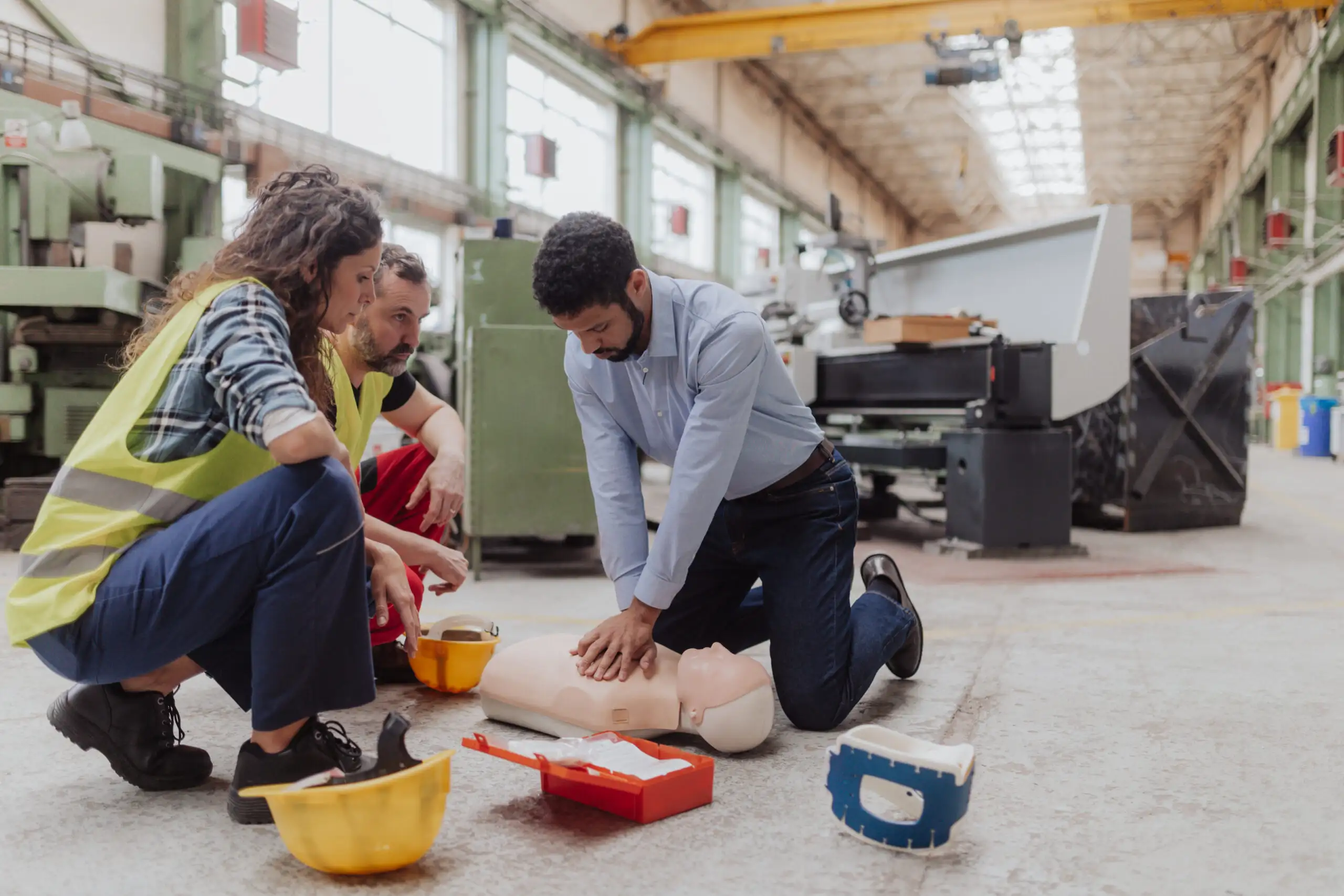
At HSS, our first-aid training is designed to give individuals and organisations practical skills for responding to emergencies. Learning how to assess a situation, provide appropriate first aid, and respond calmly can be valuable both at work and during everyday activities. Consider completing a recognised first-aid course to build practical emergency-response skills for whatever your next adventure brings.