Long hours on the road come with real risks. A tyre can burst without warning, traffic can stop suddenly, or a driver can fall ill during a delivery. In these situations, the first few minutes are critical, and a trained driver can make a real difference before medical help arrives.
For fleet operators, first aid readiness is an essential part of protecting staff, vehicles and business operations. This guide explains why first aid matters on the road and how drivers and fleet managers can prepare for emergencies.
Why Road Emergencies Need a Quick Response
Roads are unpredictable. Even careful drivers can be caught in a crash caused by someone else. Heat, fatigue, long shifts and heavy traffic add to the risk. Emergency services do their best, but they cannot always reach a spot immediately, especially on highways or in remote areas.
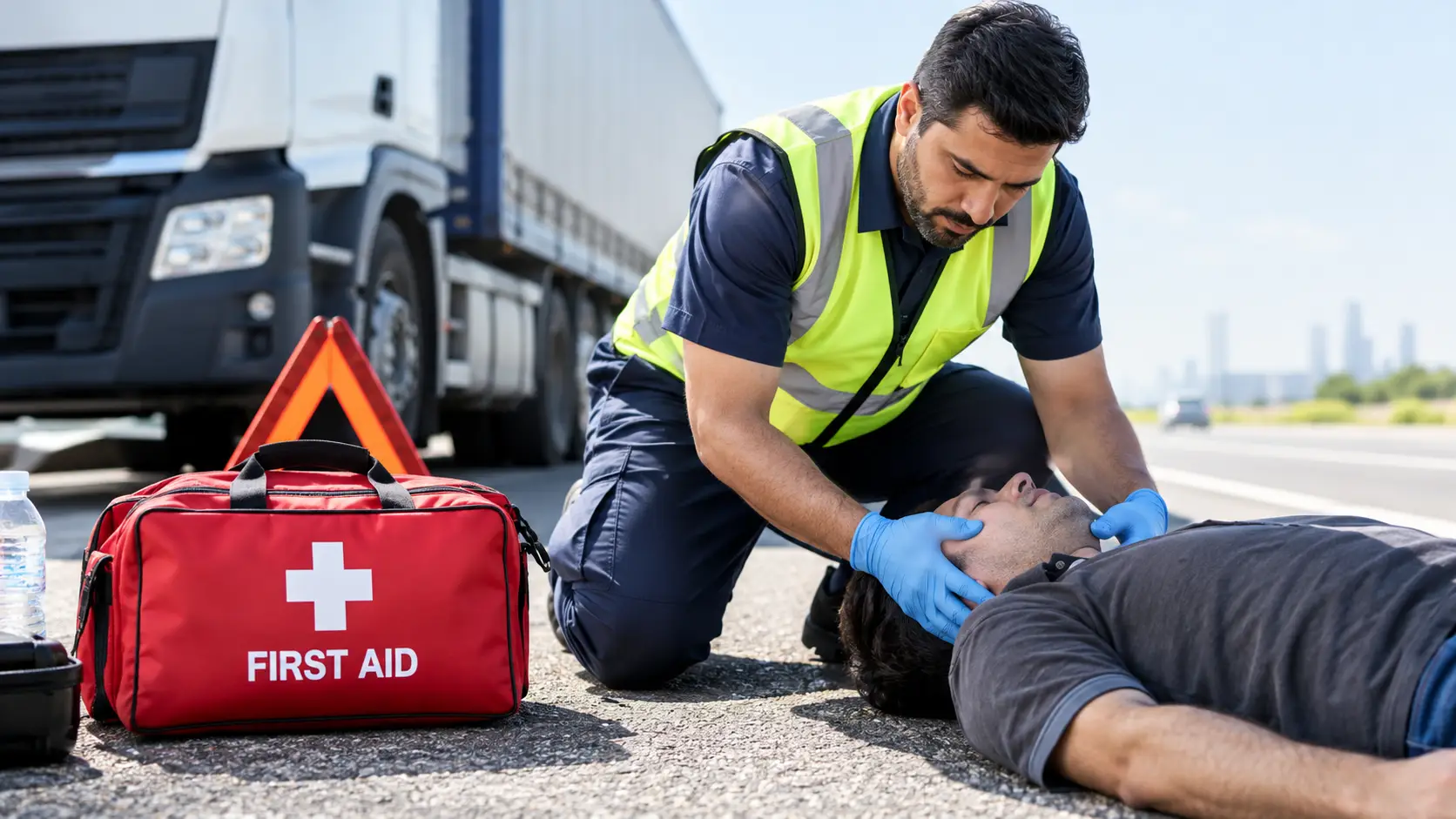
That gap between the incident and the ambulance is where first aid makes a difference. A person who stays calm and knows what to do can:
- Stop bleeding before it becomes life-threatening
- Keep an injured person’s airway open
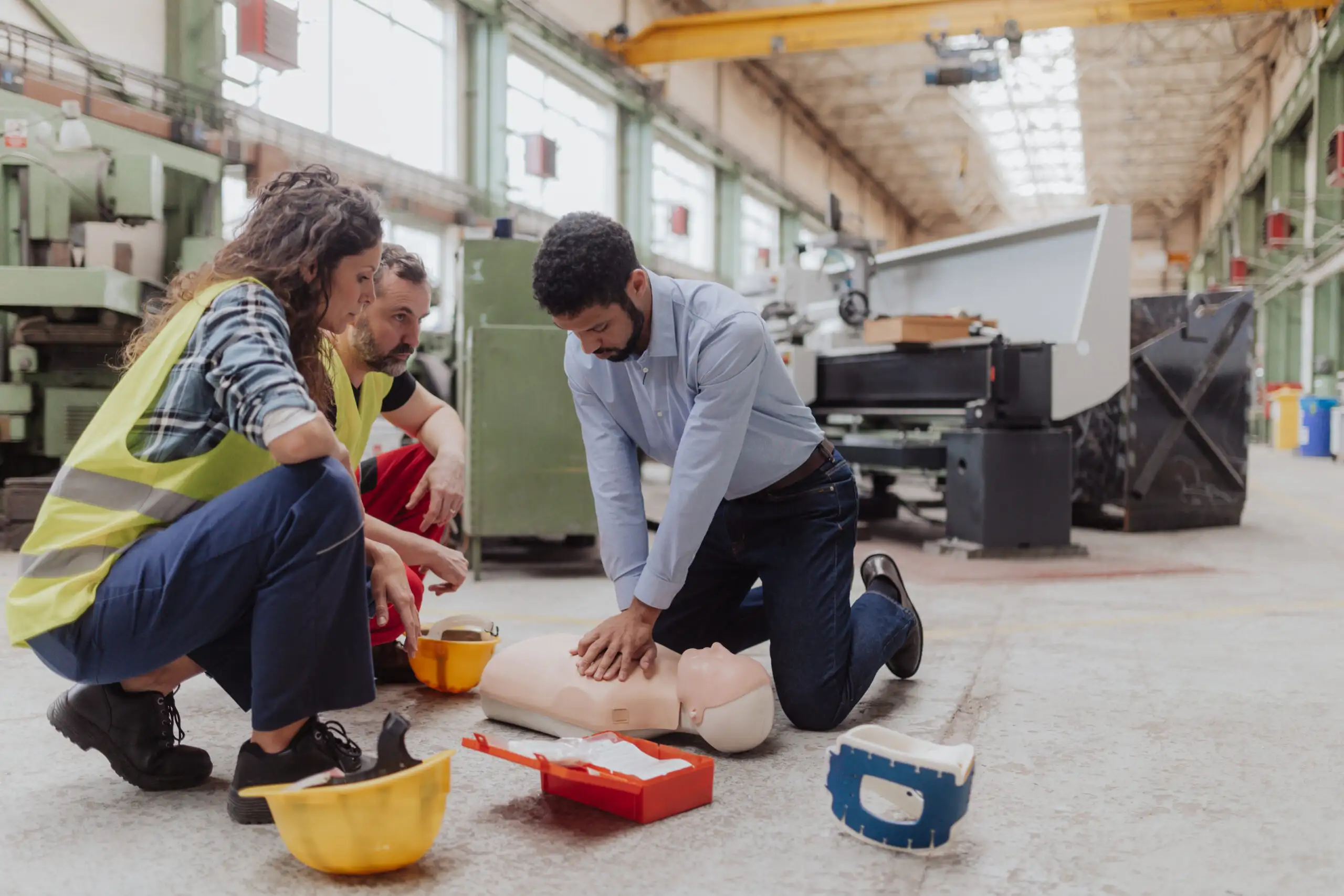
- Start CPR if someone stops breathing
- Prevent further injury at the scene
- Give clear information to emergency responders
None of this requires a medical degree. It requires basic training and the confidence to act.
Common Emergencies Drivers May Face
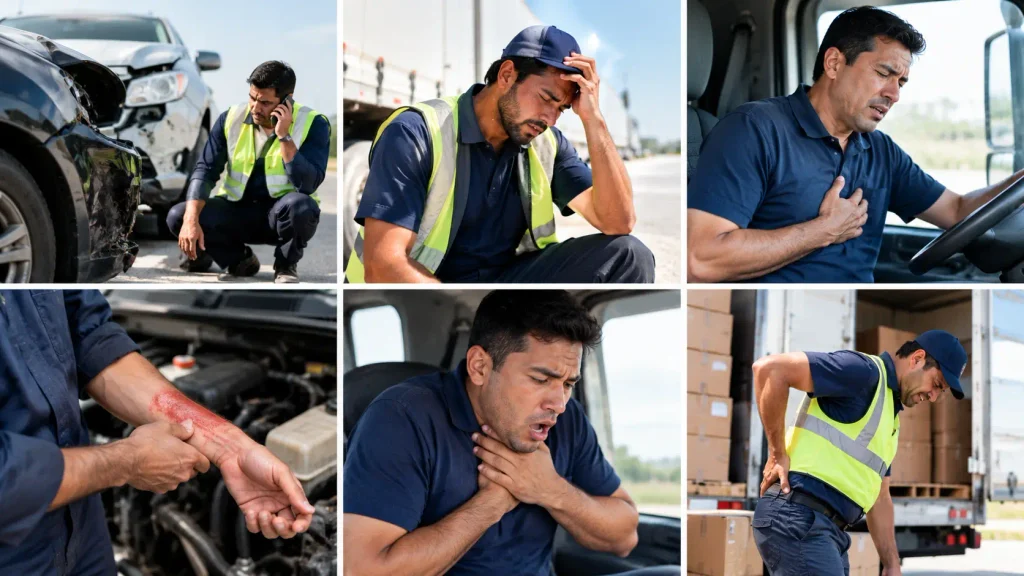
Every driver should understand the situations they are most likely to meet. Some of the most common include:
- Road collisions: cuts, fractures, head injuries and shock
- Heat-related illness: heat exhaustion and heatstroke, especially in hot climates
- Sudden medical events: chest pain, fainting, seizures or low blood sugar
- Burns: from hot engines, fuel fires or exposed wiring
- Choking: during meal breaks or while eating on the go
- Back and muscle injuries: from loading and unloading cargo
Knowing the warning signs of each one helps drivers act sooner and avoid panic.
What To Do at the Scene of an Accident
When a crash happens, the first reaction is often to rush in. But safety comes first. A simple routine can keep everyone protected.
1. Check the area:
Make sure it is safe before you step out. Turn on hazard lights, and place a warning triangle if you have one. Stay clear of moving traffic.
2. Call for help:
Contact emergency services and give your exact location, the number of people hurt and the type of injuries you can see.
3. Check the injured:
Look at whether the person is awake, breathing and bleeding. Do not move someone unless there is immediate danger, such as fire, because moving them can make a spinal injury worse.
4. Give basic care:
Press firmly on a bleeding wound with a clean cloth. If a person is not breathing, begin CPR. Keep the person warm and talk to them calmly.
5. Stay until help arrives:
Pass on what you saw and what you did when the responders got there.
This routine is easy to remember, and it works best when it has been practised, not just read.
Building a Proper First Aid Kit for Vehicles
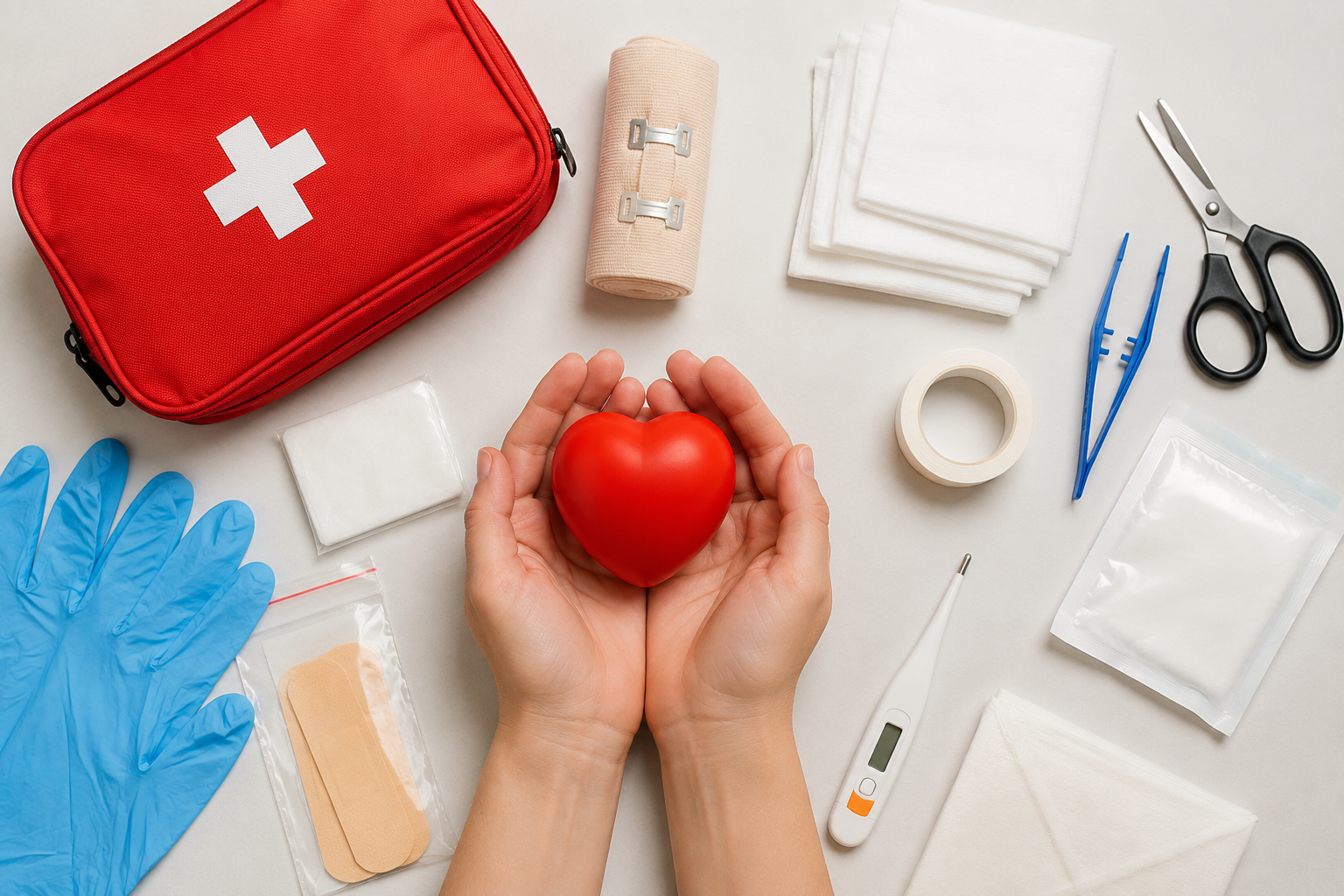
A kit is only useful if it is complete, clean and easy to reach. Every vehicle in a fleet should carry one, and it should be checked on a regular schedule. A good vehicle kit usually includes:
- Sterile dressings and bandages in different sizes
- Adhesive plasters
- Disposable gloves and a face shield for CPR
- Antiseptic wipes
- Scissors and tweezers
- A foil blanket
- Saline solution for eyes and wounds
- A small torch with spare batteries
- A printed card with emergency numbers
Expiry dates are easy to forget. Fleet managers should assign one person to check each kit every month and replace anything that is used or out of date.
Why Fleet Operators Should Invest in Training
Having a kit in the truck is one thing. Having a driver who knows how to use it is another. Training turns equipment into real help.
For fleet operators, the benefits go further than safety:
- Fewer serious outcomes: quick care often reduces the severity of injuries
- Confident drivers: staff who feel prepared stay calmer under pressure
- Better compliance: many workplaces are expected to follow safety standards
- Stronger team spirit: employees feel valued when their wellbeing is taken seriously
- Lower downtime: fewer long recoveries mean fewer gaps in your schedule
A good place to start is a practical first aid course with hands-on CPR and bleeding control practice. You can explore the first aid courses offered by HSS to see what suits your team.
Looking at the Bigger Safety Picture
First aid is the last line of defence. The best approach is to reduce the chance of an emergency in the first place. Fleet managers can do this by looking carefully at how their operation works day to day.
That means reviewing routes, shift lengths, vehicle condition and loading practices. A proper risk assessment helps you spot hazards before they cause harm and decide which controls make sense. If your company needs wider guidance on policies and procedures, health and safety consultancy can help you build a plan that fits your operation.
Simple Habits That Make a Difference
Preparation does not have to be complicated. Small habits, repeated often, make drivers safer. Encourage your team to:
- Take regular breaks on long journeys to avoid fatigue
- Drink enough water, particularly in hot weather
- Keep the first aid kit within reach, not buried under cargo
- Save emergency numbers in the phone and the vehicle
- Report any near-miss so the same mistake is not repeated
- Refresh first aid skills every year, since memory fades without practice
Working With the Right Training Partner
Choosing a provider matters. Look for trainers with real medical backgrounds, recognised accreditation and a practical teaching style. Courses should include plenty of hands-on practice, not only slides and theory.
HSS has more than 14 years of experience delivering training in the UAE and GCC, with internationally accredited programmes and medically qualified instructors. Their approach focuses on building real confidence, so that people know what to do when it counts.
Final Thoughts
Road emergencies rarely come with a warning. What you can control is how ready you are. Drivers who know basic first aid, vehicles that carry a well-stocked kit, and fleet managers who plan ahead create a much safer working environment for everyone.
Start small. Check your kits this week, talk to your drivers about the risks they face, and book training for your team. A few hours of preparation today could help save a life tomorrow.