Summer in the UAE brings extreme heat and humidity, putting outdoor workers, athletes, drivers and children at real risk of heat illness. It can start quietly and become life-threatening within minutes, so knowing the warning signs and how to respond is essential. Parents should learn first aid for children, since kids overheat faster than adults.
Heat Exhaustion vs. Heat Stroke
Heat exhaustion and heat stroke are related, but heat stroke is far more dangerous and needs emergency care. With heat exhaustion, a person sweats heavily and has cool, clammy skin, along with a headache, dizziness, nausea, cramps and weakness. With heat stroke, the body temperature reaches 40°C or higher, the skin feels hot, and the person may become confused, faint or have a seizure. If someone who was only tired suddenly becomes confused or hard to wake, treat it as heat stroke and call 998 immediately.
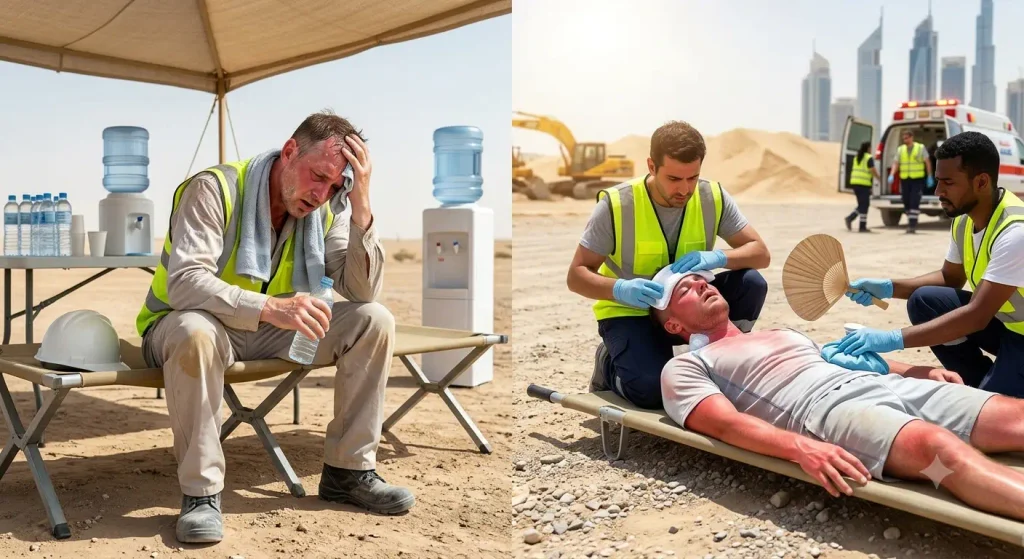
Comparison of Heat exhaustion and Heat Stroke:
| Heat Exhaustion | Heat Stroke | |
| Seriousness | Warning stage, can be treated at the scene | Life-threatening medical emergency |
| Body temperature | Raised, but usually below 40°C | 40°C or higher |
| Skin | Cool, clammy and heavily sweating | Hot, and may be dry or still sweaty |
| Mental state | Alert, but tired and dizzy | Confused, slurred speech, strange behaviour |
| Other symptoms | Headache, nausea, vomiting, muscle cramps, weakness | Fainting, seizures, loss of consciousness |
| Pulse | Fast and weak | Fast and strong |
| Breathing | Normal or slightly fast | Rapid |
| What to do | Cool down, rest, sip water, monitor closely | Call 998 immediately and cool the person fast |
How to Treat Heat Exhaustion
Act quickly, and the person can often recover within an hour.
- Get them out of the heat. Move them into an air-conditioned room or at least into the shade.
- Lay them down. Raise their legs slightly if they feel faint.
- Loosen or remove extra clothing, such as safety gear, jackets and hats.
- Cool the skin. Use a damp cloth, a fan or cool water on the face, neck and arms.
- Give small sips of cool water. An oral rehydration drink works well if you have one. Avoid very cold drinks, tea, coffee and energy drinks.
- Stay with them and watch closely. Check on them every few minutes.
If they don’t feel better within 30 minutes, or if they start vomiting repeatedly or become confused, call for help. Heat exhaustion can turn into heat stroke if it’s ignored.
How to Treat Heat Stroke
This is where every minute counts. Call an ambulance first. In the UAE, dial 998 (or 999 for police). Then start cooling the person while you wait.
- Move them somewhere cooler and lay them down.
- Remove excess clothing.
- Cool them as fast as you can. Spray or sponge the body with cool water and fan them. Put wrapped ice packs or cold wet towels on the neck, armpits and groin, where large blood vessels sit close to the skin.
- If you can, immerse them in cool water up to the neck, as long as they are awake and you can keep them safe.
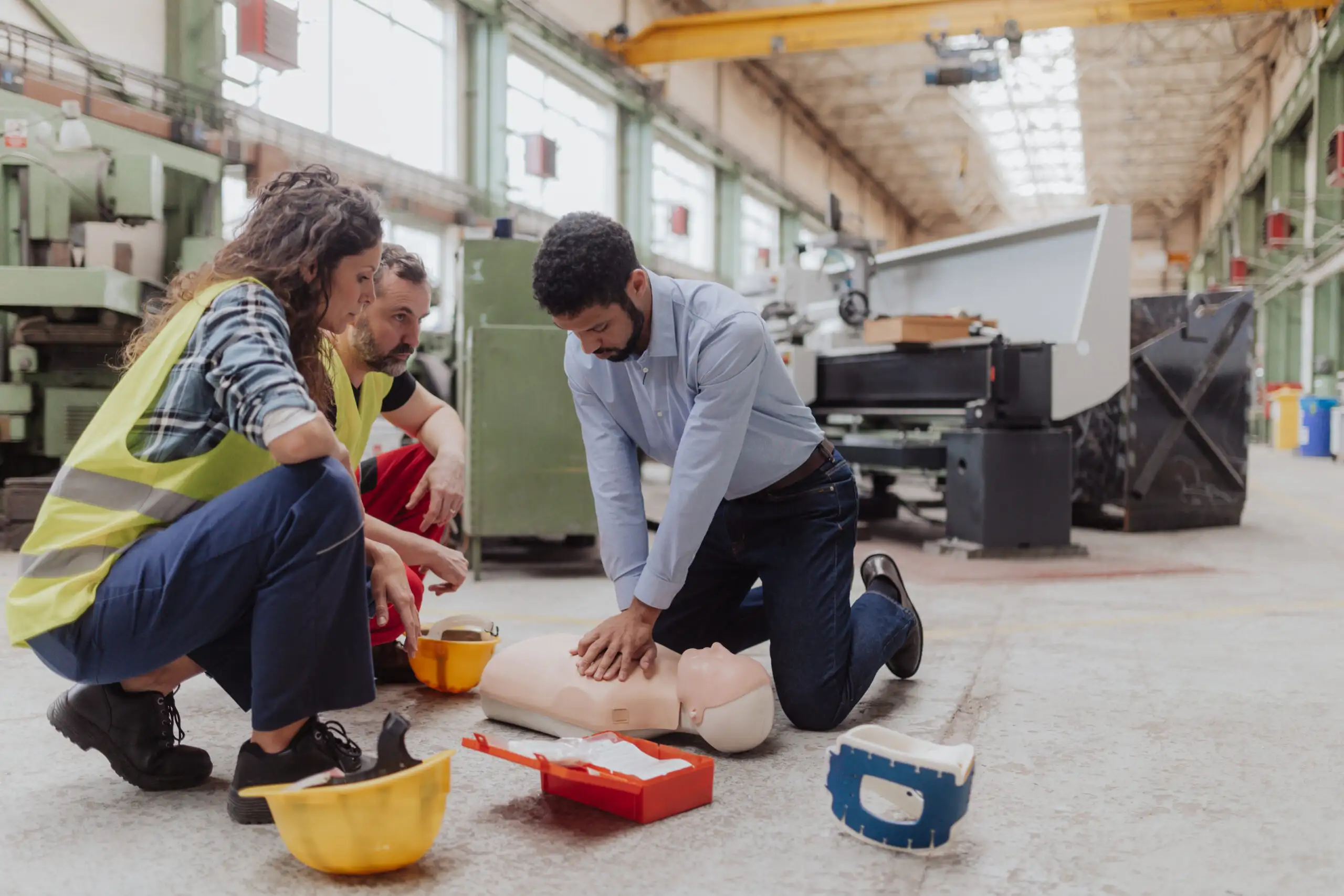
- Check their breathing. If they stop breathing or have no pulse, start CPR and use an AED if one is nearby. This is a skill best learned in a hands-on first aid course, not for the first time during an emergency.
- Place them in the recovery position if they are unconscious but breathing, or if they vomit.
Do not give food or drink to someone who is confused, drowsy or unconscious. They could choke.
Common Mistakes to Avoid
- Giving painkillers: Paracetamol and ibuprofen do not help with heat illness, and they can cause harm.
- Using ice-cold water on a very hot person for too long: Cool them steadily and keep checking, because overcooling is also a problem.
- Waiting to see if it passes: With heat stroke, waiting is the most dangerous choice.
- Sending the person back to work: Even after they feel better, they need rest and rehydration for the rest of the day.
Staying Safe in the UAE Heat
Prevention is easier than treatment. A few habits make a big difference:
- Drink water throughout the day, not just when you feel thirsty.
- Avoid outdoor work and exercise in the middle of the day. The UAE’s midday break rule for outdoor workers during summer exists for good reason.
- Wear light, loose clothing and a hat.
- Take regular breaks in the shade or in air-conditioning.
- Never leave children or pets in a parked car, even for a minute.
- Check on older adults, who may not notice they’re overheating.
Employers should provide shaded rest areas, cool water and first aid training for construction teams and other outdoor crews.
Be Ready Before It Happens
Reading about first aid helps, but practice is what builds confidence. When someone collapses from the heat, there’s no time to look up instructions. You need to already know what to do.
At HSS, our medically qualified instructors teach practical first aid, CPR and AED courses in Dubai for workplaces, schools, parents and sports professionals. Our training follows local and international standards, so your team is prepared for real emergencies, not just the theory. A few hours of training could help you save a life this summer.