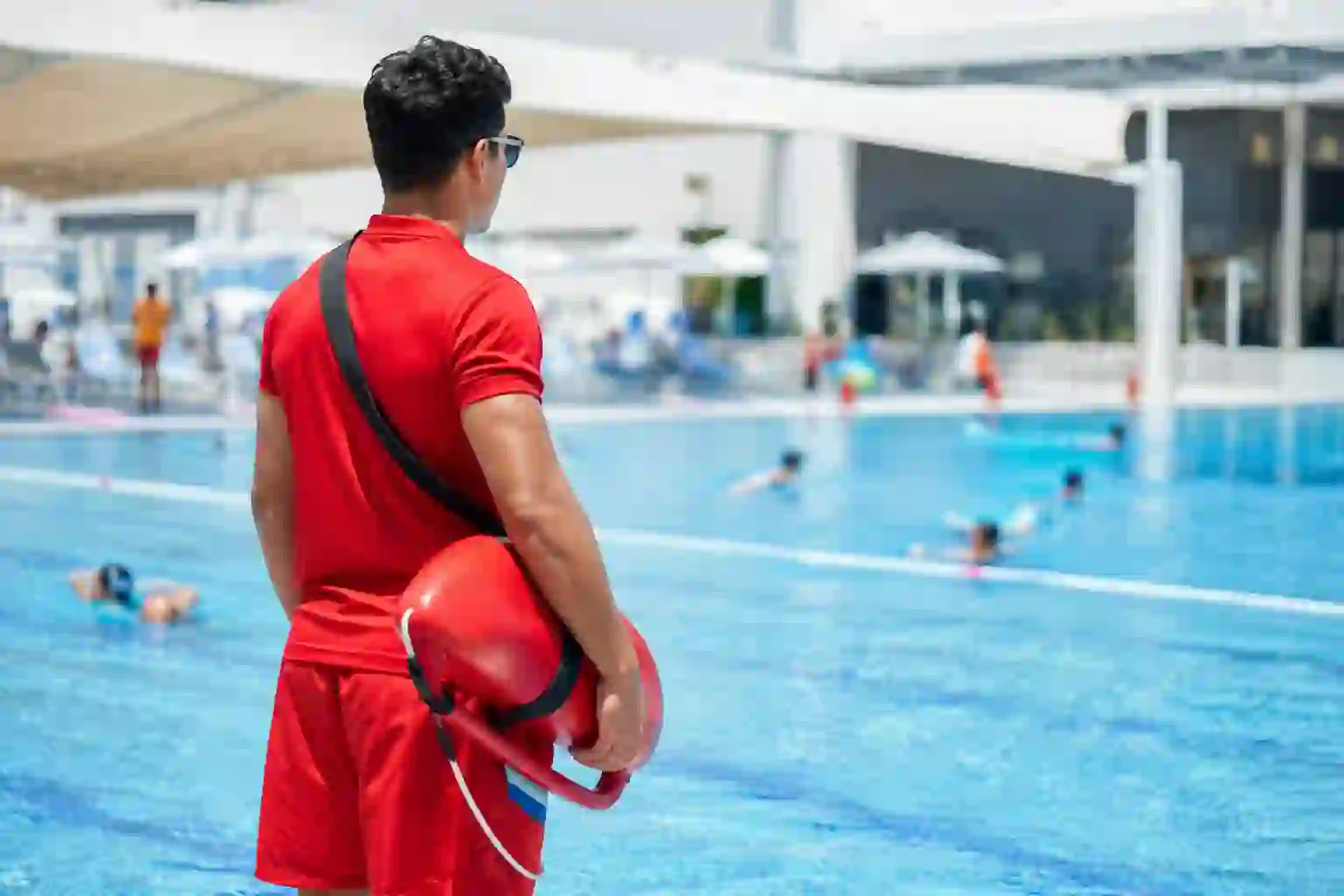
When people hear the word “lifeguards”, their minds start to imagine a person sitting near a pool and watching swimmers. But lifeguarding is more serious than we think.
Lifeguards are more responsible for keeping people safe, identifying danger before it happens and reacting rapidly in emergencies.
In the UAE, most of the months have warm weather in a year, so pools and beaches are crowded. Families, children, and tourists enjoy themselves at the beach. With so many people around water, safety becomes a very important responsibility.
At HSS, we often remind people that good lifeguards are not only trained for rescue situations. A big part of their job is actually preventing emergencies before they happen.
Most emergencies start small
A truly dangerous situation might begin with something we think is safe. A child running near the pool, someone swimming beyond their limit, or people ignoring the safety instructions may not seem like a big deal at first. Still, those little in-between moments can change into a real emergency.
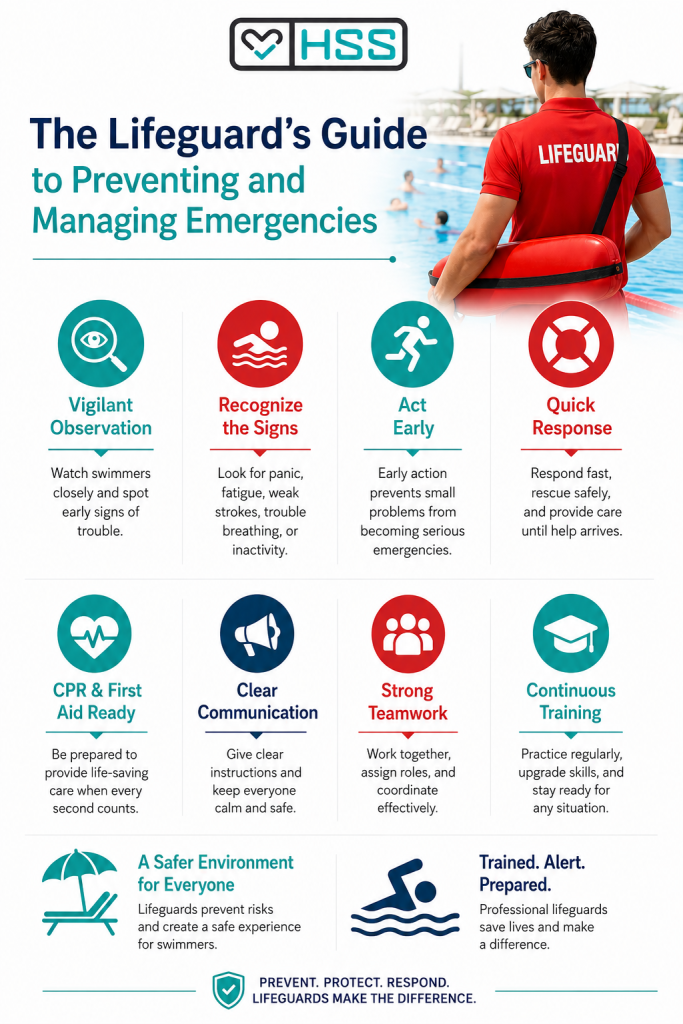
That’s why lifeguards spend most of their time just observing people. They keep a close eye on swimmer behaviour and scan for early signs that things could go wrong.
In a lot of cases, a quick, simple warning from a lifeguard stops an accident before it even happens.
Staying alert is part of the job
One of the tougher parts of lifeguarding is staying focused for long hours. Pools and beaches get loud and busy, especially during holidays or on weekends.
Even when it seems calm, lifeguards can’t really loosen up. Water emergencies often happen faster than people assume, and that timing makes the difference.
Many people imagine drowning as loud shouting and splashing, but real situations are often quieter. Sometimes, a person struggling in water cannot even call for help properly.
That is why experienced lifeguards pay attention to even small changes in behaviour.
Knowing when someone needs help
A swimmer in trouble might seem a little confused, worn out, or unable to keep above water properly. Children can suddenly panic in deeper parts, while adults may feel drained, even without any clear warning.
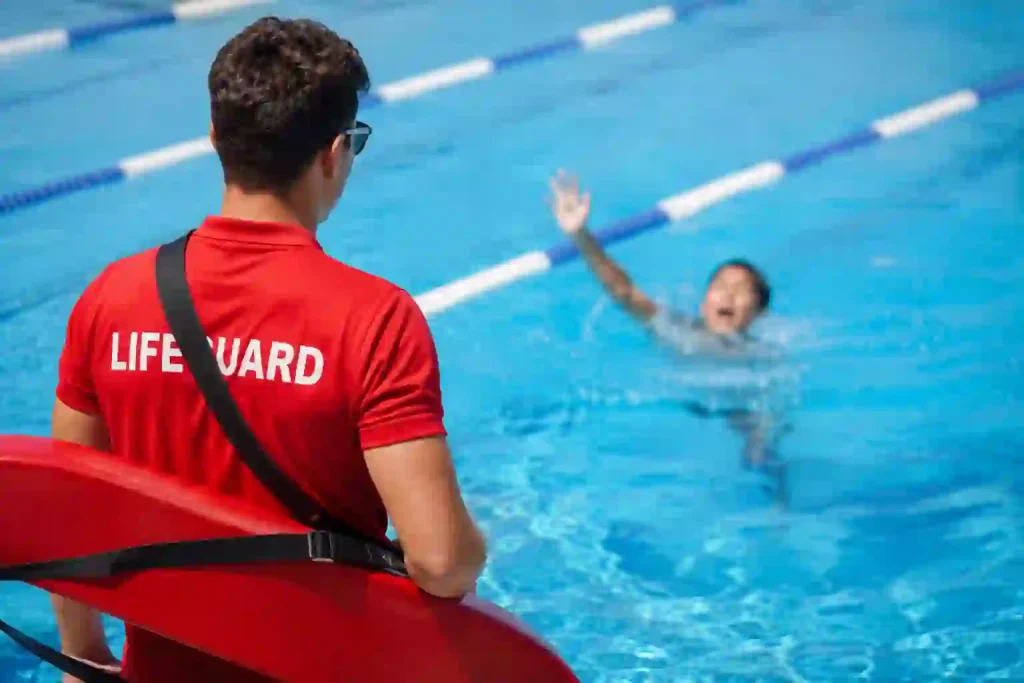
Lifeguards train themselves to catch the small, early signs, like
- Sudden panic in the water
- Weak swimming motions, or a sort of slowed-down effort
- Trouble breathing
- Someone just staying in place, without moving normally
Acting early really matters. Helping someone is essential before things get worse.
Quick response makes a huge difference
When an emergency finally does happen, every single second counts. A fast response can prevent serious injury and sometimes save a life.
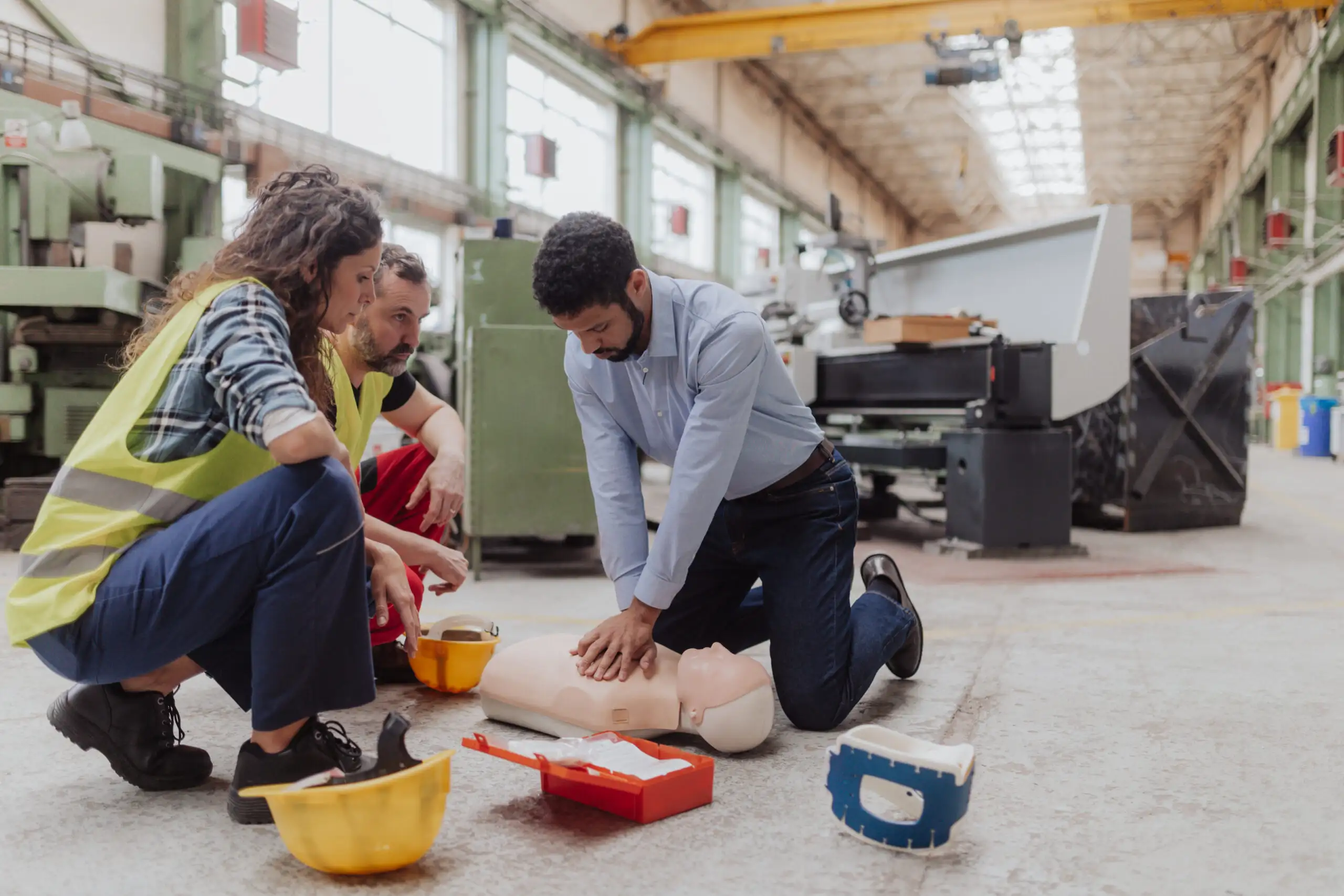
Depending on the situation, a lifeguard might need to jump into the water, guide the person back to safety, or begin CPR until the medical team arrives.
In those moments, staying calm is the main key. If you panic, decisions get messy, and confusion delays help.
This is why lifeguard training focuses so much on practice and repetition. The goal is to help lifeguards react naturally under pressure.
CPR and First Aid Are Essential
Lifeguards are usually trained in CPR and basic first aid because emergencies around water can become serious very quickly.
Someone pulled from the water may not be breathing properly. In other situations, people may suffer from slips, cuts, or heat exhaustion near the pool or beach area.
Knowing basic emergency care helps lifeguards support the injured person while waiting for professional medical teams.
As a Top first aid provider, we believe practical training is extremely important because emergencies can happen at any time.
Communication Helps Control the Situation
Good communication is another important part of lifeguarding. Lifeguards regularly guide swimmers, explain health and safety rules, and handle crowded environments.
During emergencies, communication becomes even more important. Clear instructions help prevent panic among visitors and allow rescue efforts to happen more smoothly.
Sometimes the ability to speak calmly can help control an entire situation.
Teamwork Is Important Too
At busy beaches or large swimming pools, lifeguards usually work together. During emergencies, teamwork makes the response faster and more organised.
One person may assist the swimmer while another contacts emergency services or clears people from the area. When teams practice together regularly, everyone understands their role better.
This coordination becomes very important during serious situations.
Training Should Continue Regularly
Emergency response skills can fade over time if they are not practised regularly, and it happens. Lifeguards often need refresher training to stay self-assured and ready, even when things get hectic fast. Professional programs such as Pool Certification help lifeguards strengthen their rescue techniques, CPR skills, and emergency response capabilities through practical, hands-on training.
Practice sessions help improve:
- Rescue response
- CPR skills
- Emergency coordination
- Confidence under pressure
Basically, the more ready a lifeguard feels inside, the better they usually perform in a real emergency.
Lifeguards Help People Feel Safer
Most visitors may never realise how much attention lifeguards are paying to them. But simply knowing trained professionals are nearby helps people feel safer.
Parents feel more relaxed when children swim under supervision, and visitors feel more confident at pools and beaches where safety is taken seriously.
A strong lifeguard presence often prevents risky behaviour before it becomes dangerous.
How HSS Supports Lifeguard Training
At HSS, we provide practical lifeguard and emergency response training across the UAE. We focus on realistic situations, hands-on learning, and helping lifeguards build confidence step by step.
Our goal is simple — to help safety teams feel prepared when real emergencies happen.
Because in water-related emergencies, quick thinking and proper training can truly save lives.
Conclusion
Lifeguarding isn’t just about sitting near the water and watching swimmers. It needs patience, focus, responsibility, and the ability to react really fast when things get stressful.
Stopping emergencies before they happen is the first concern, yet also managing them the right way matters just as much. Like noticing risks early and then performing CPR, every move does count.
At HSS, we believe that proper and effective training gives confidence and skill to lifeguards for protecting people more effectively.
And sometimes staying sharp for a few more seconds can be the difference between okay and not okay.