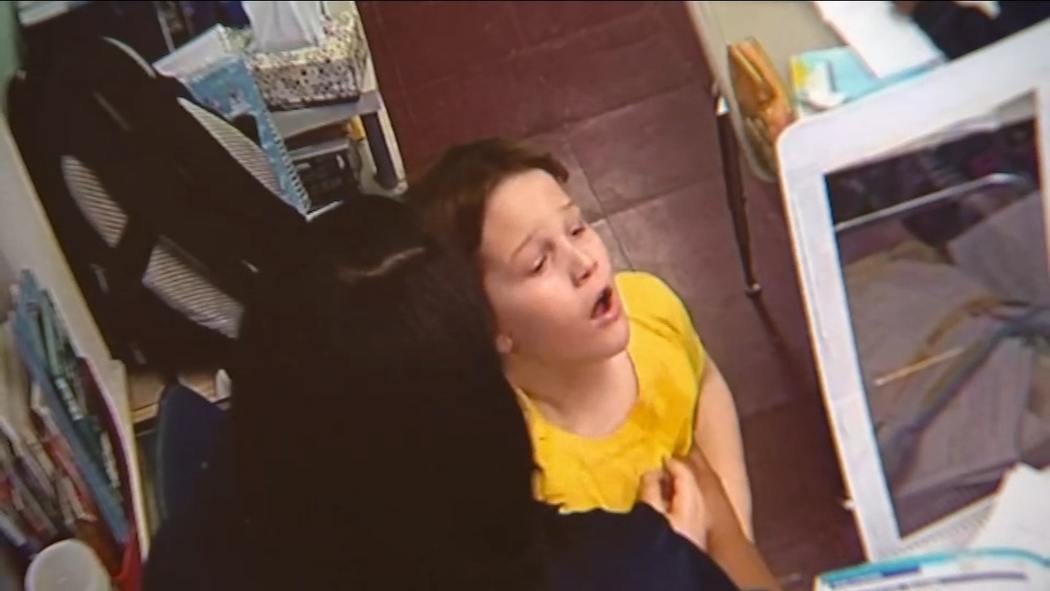
It is a normal school day. Children are eating lunch, laughing, and talking with friends. Suddenly, one child stops talking. They look scared. They are holding their throat. They cannot speak or breathe properly.
At that moment, there is no time to think too much. There is no time to search for instructions. The only thing that matters is this: Do you know what to do?
Choking is a serious emergency. It can happen quickly and without warning. At HSS, we believe every teacher, school staff member, and childcare worker should know how to act fast and confidently if a child chokes.
Why Choking Is So Dangerous
When a child chokes, something blocks their airway. This can be food, candy, or even a small object. When the airway is blocked, air cannot reach the lungs. Without oxygen, the brain can be damaged in just a few minutes.
Children are at higher risk because:
- They talk or laugh while eating
- They may not chew food properly
- They sometimes put small objects in their mouths
- They may panic and not explain what is wrong
Choking can turn from a small problem into a life-threatening situation very quickly.
Common Causes of Choking in Schools
In schools, choking often happens during:
- Lunch or snack time
- Birthday celebrations
- Playing with small toys or objects
Certain foods are more dangerous, such as:
- Grapes
- Nuts
- Hard candy
- Popcorn
- Large pieces of meat
Even older children can choke. That is why supervision and training are very important.
How to Know If a Child Is Choking
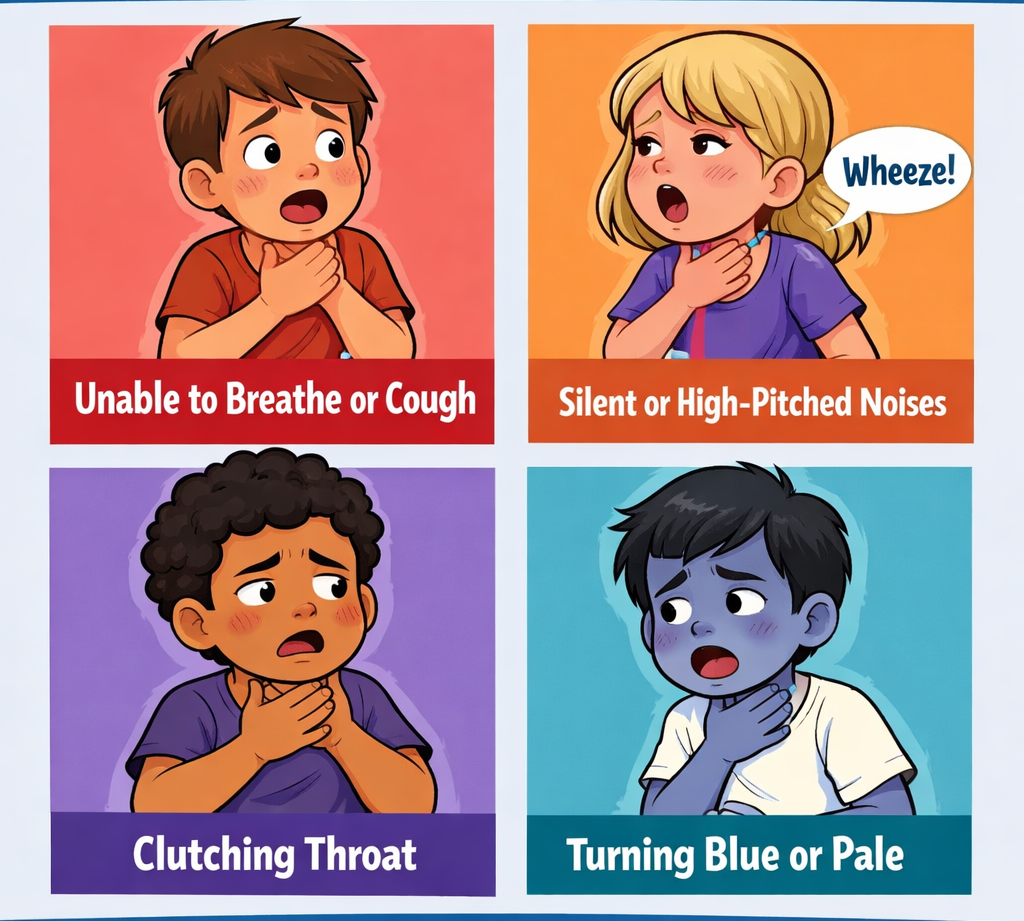
It is important to know the signs of choking. A child who is choking may:
- Be unable to speak
- Be unable to cough properly
- Make little or no sound
- Hold their throat
- Have difficulty breathing
- Turn red or blue around the lips
- Look frightened or confused
If a child can cough strongly, encourage them to keep coughing. Coughing can help remove the object.
But if the child cannot breathe, talk, or cough, you must act immediately.
What Should You Do?
If a child over one year old is choking and cannot breathe:
- Stay calm.
- Stand behind the child.
- Give firm back blows between the shoulder blades.
- If the object does not come out, perform abdominal thrusts (also known as the Heimlich manoeuvre).
These actions help push air out of the lungs to remove the object.
For babies under one year old, the method is different. It includes back blows and chest thrusts. Abdominal thrusts should not be used for infants.
It is also important to call emergency services as soon as possible during a serious choking emergency.
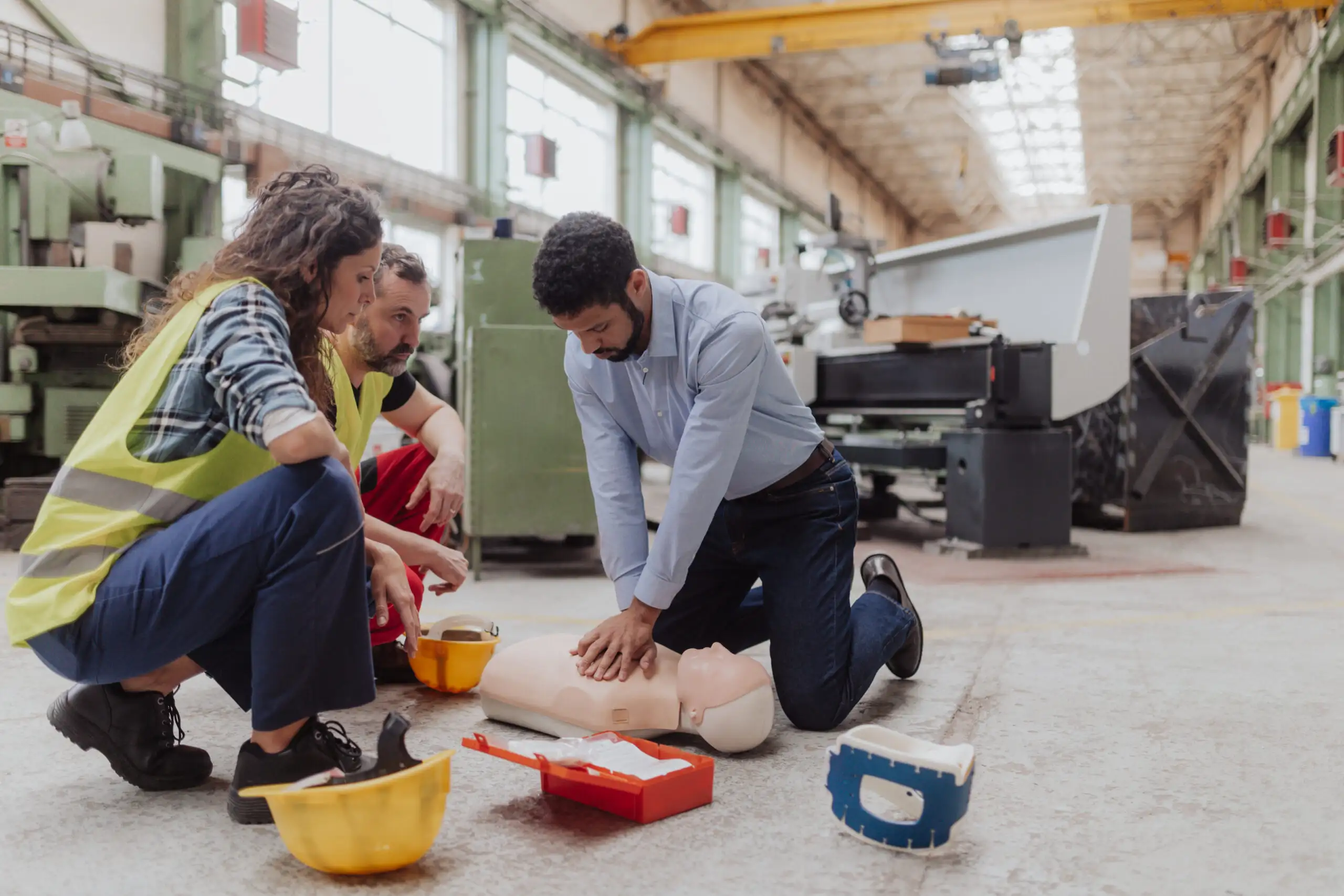
But reading these steps is not the same as doing them in real life. In an emergency, people may panic. Hands may shake. Fear may take over. That is why proper training is very important.
Why Training Makes a Big Difference
Many people think they know what to do because they have watched a video online. But in real situations, stress can make it hard to remember the correct steps.
Professional first aid training helps you:
- Practice the correct techniques
- Learn how much force to use
- Understand when to call for help
- Build confidence
- Stay calm under pressure
At HSS, we provide hands-on training. This means you do not just listen — you practice. You learn in a safe and guided environment, so you are ready for real emergencies.
Confidence comes from practice.
Teachers Have a Big Responsibility
Teachers and school staff care for many children every day. Parents trust schools to keep their children safe.
During busy times like lunch breaks, it is easy to miss small warning signs. A child who is choking may not make loud sounds. They may freeze and struggle silently.
When staff are trained in first aid, they can:
- Recognise problems quickly
- Act without delay
- Work together as a team
- Reduce panic in the classroom
A prepared teacher can save a life.
It Is Not Just About Choking
Choking is only one type of emergency. In schools, children may also experience:
- Falls and injuries
- Allergic reactions
- Asthma attacks
- Seizures
- Cuts and bleeding
Having trained staff means children get immediate help before medical professionals arrive. Quick action can prevent small problems from becoming serious ones.
First aid training creates a safer environment for everyone.
Building a Safe School Environment
When a school invests in first aid training, it shows that Child safety is a priority. It builds trust with parents and gives staff peace of mind.
Trained employees feel more confident. They feel prepared. They know they can handle emergencies if they happen.
This creates a culture of safety where everyone is more aware and careful.
Ask Yourself This Question
If a child chokes in your classroom today, would you know what to do?
- Would you recognise the signs immediately?
- Would you act quickly and correctly?
- Would you feel confident instead of afraid?
In emergencies, seconds matter. The right action at the right time can save a life.
At HSS, we are committed to helping schools, nurseries, and educational institutions prepare for these critical moments. Our basic first aid training programs are simple, practical, and easy to understand. We focus on real-life situations so staff members feel ready and confident.
Because when it comes to children’s safety, being “almost prepared” is not enough.
- Be trained.
- Be confident.
- Be ready.
With the right knowledge and practice, you can make all the difference.